
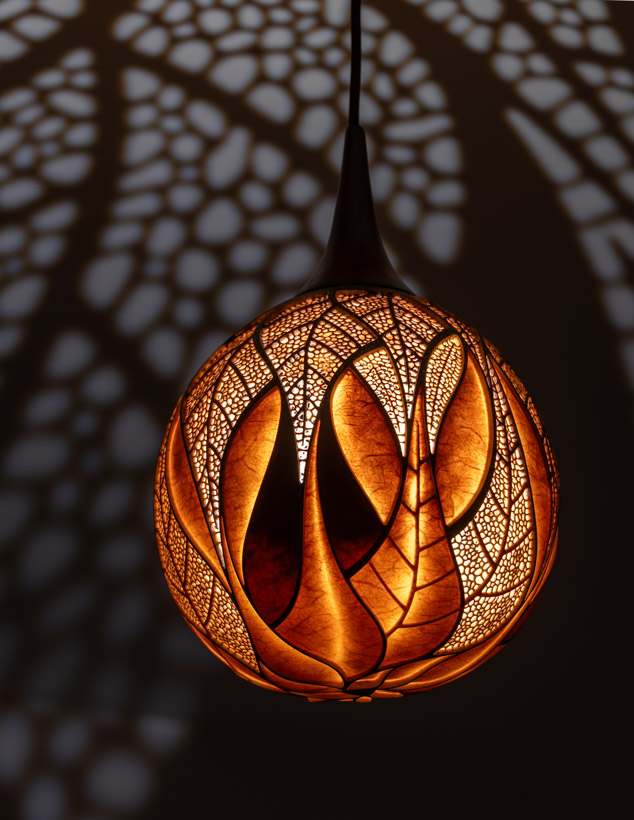
Virelis
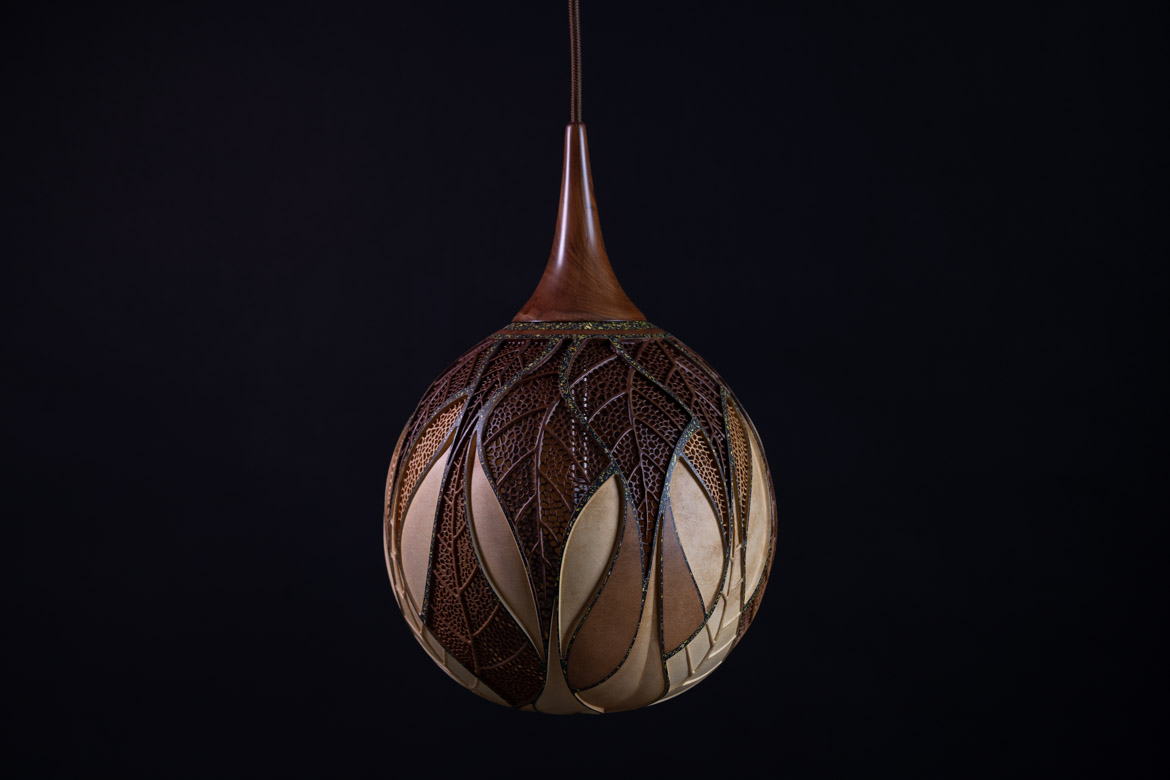
Virelis takes its name from the Latin virere — to grow, to be green, to be alive.
This lamp is both a continuation and a step back.
A return to a technique I explored years ago, now approached with a different sensitivity.
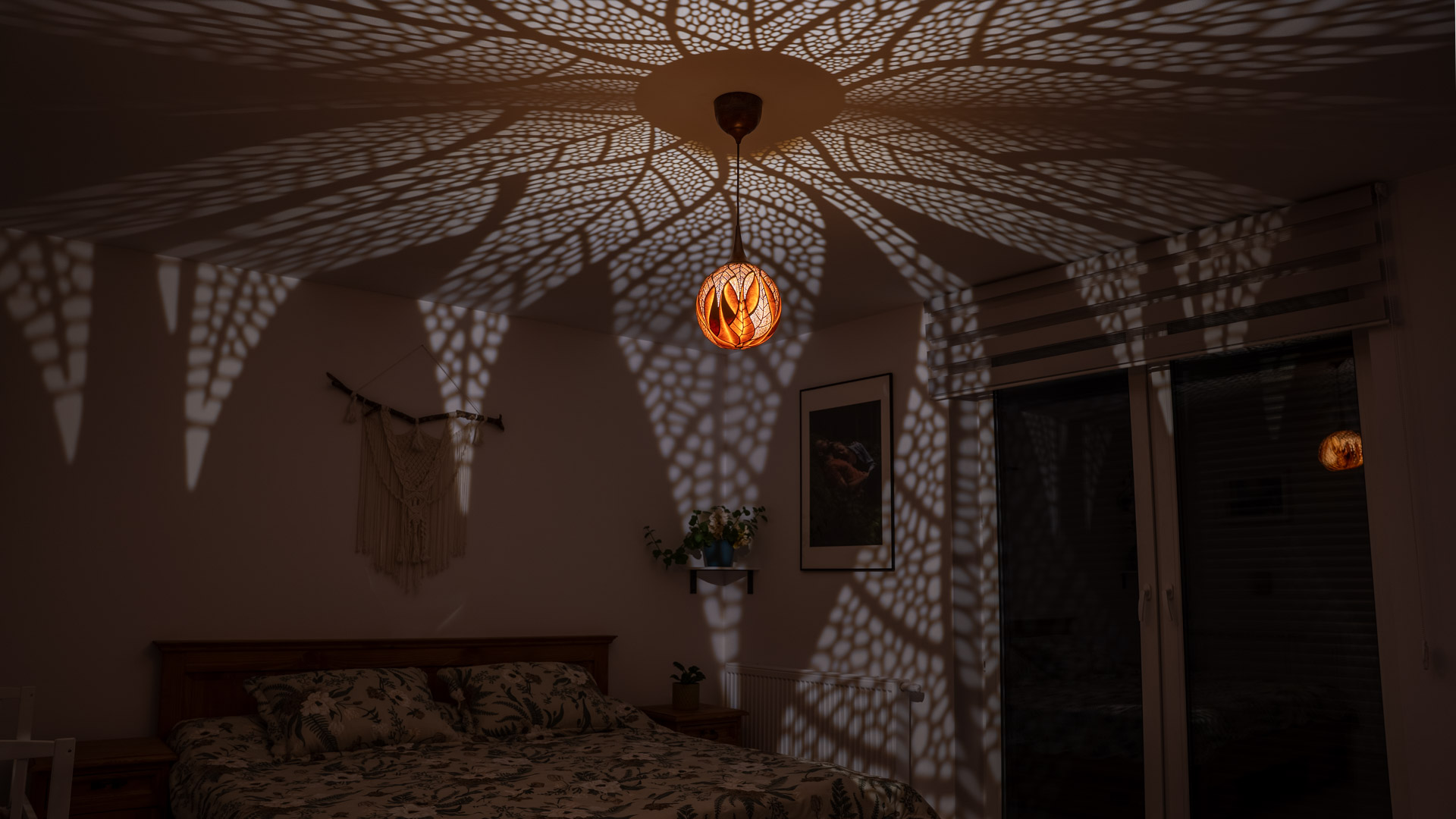

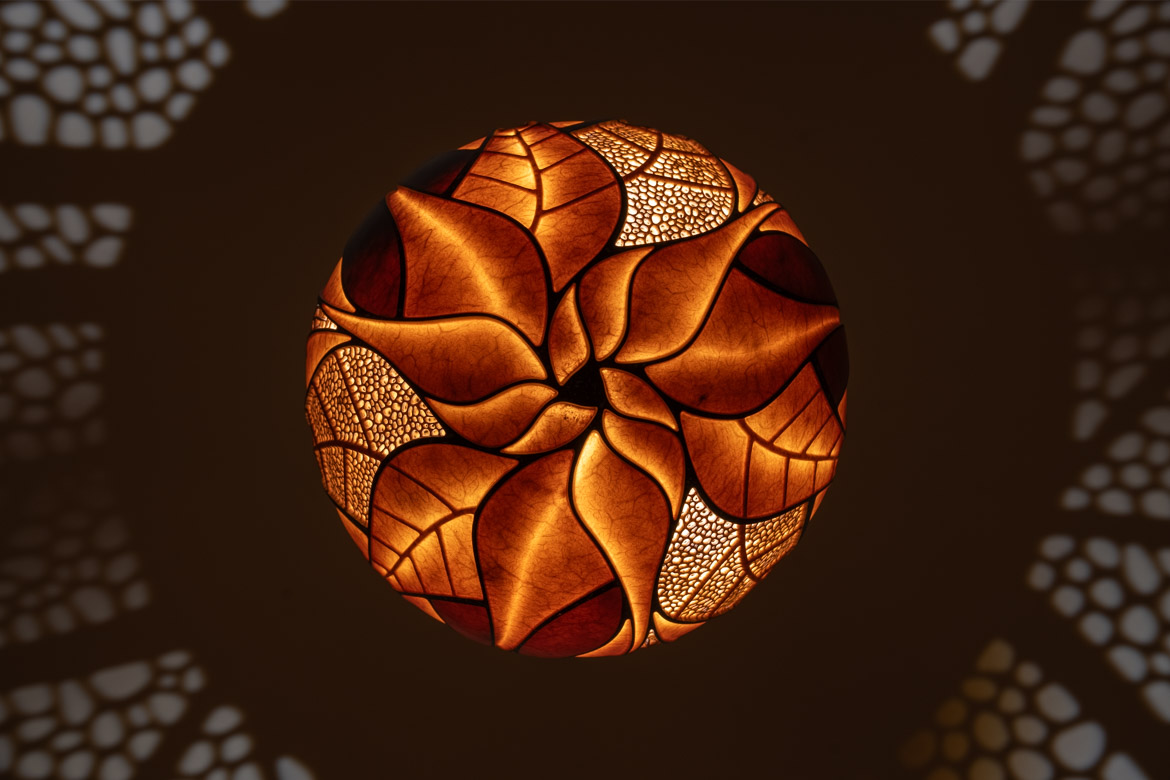
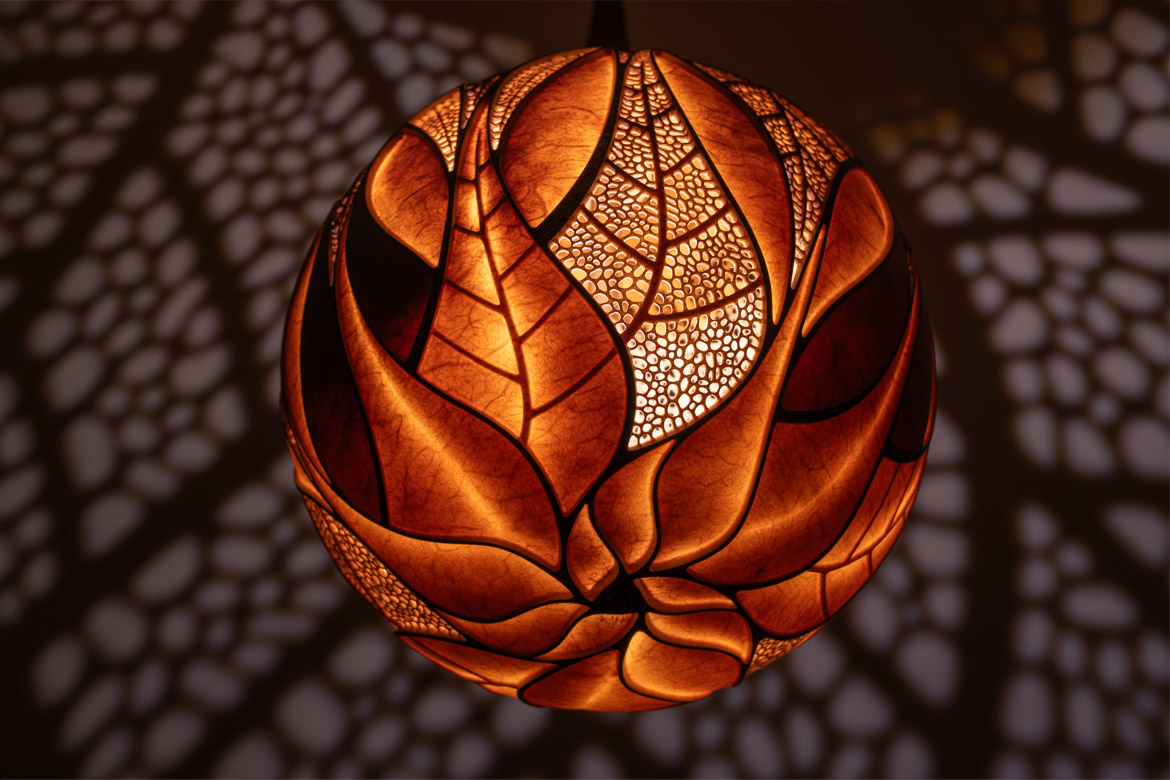
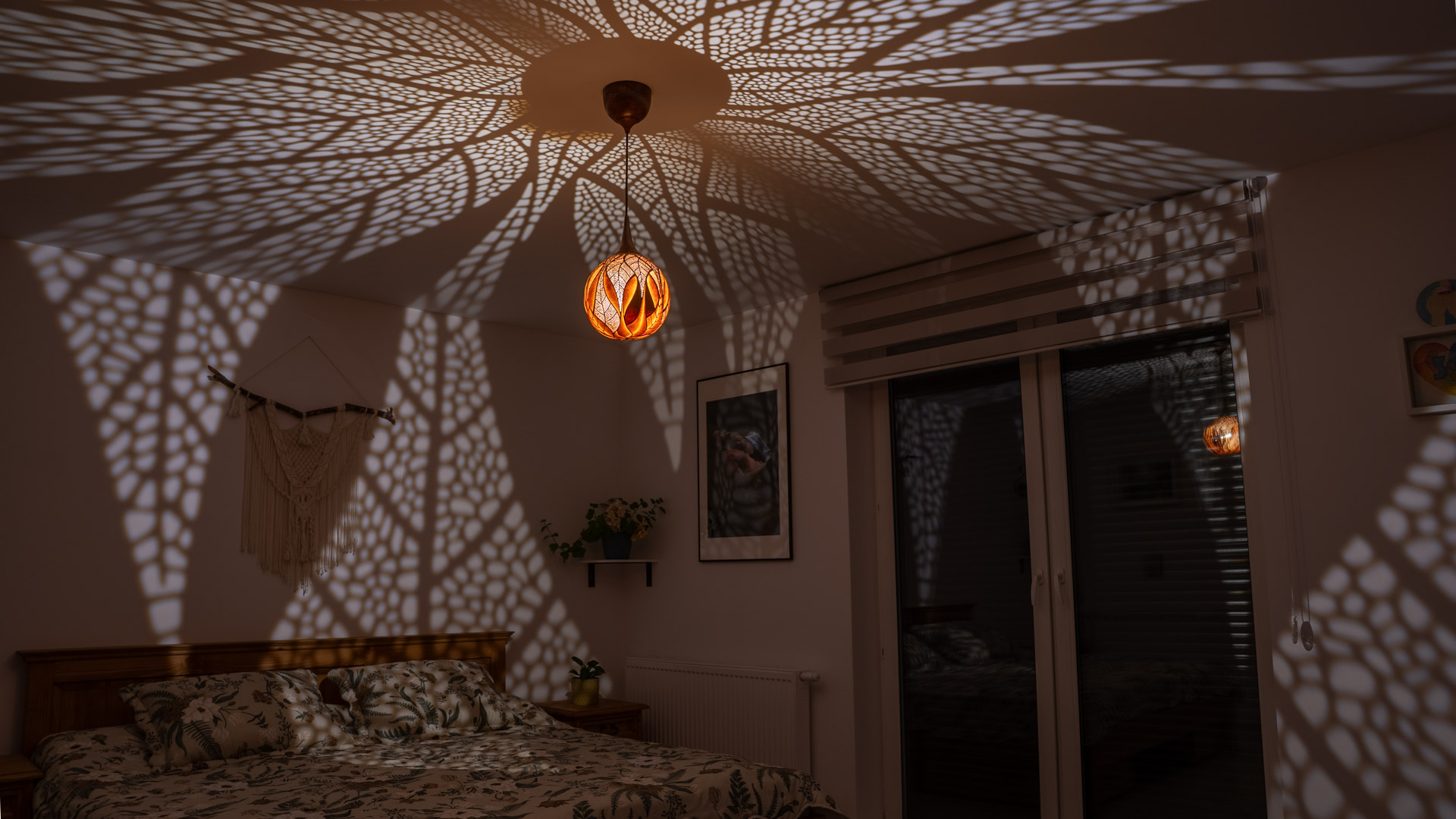
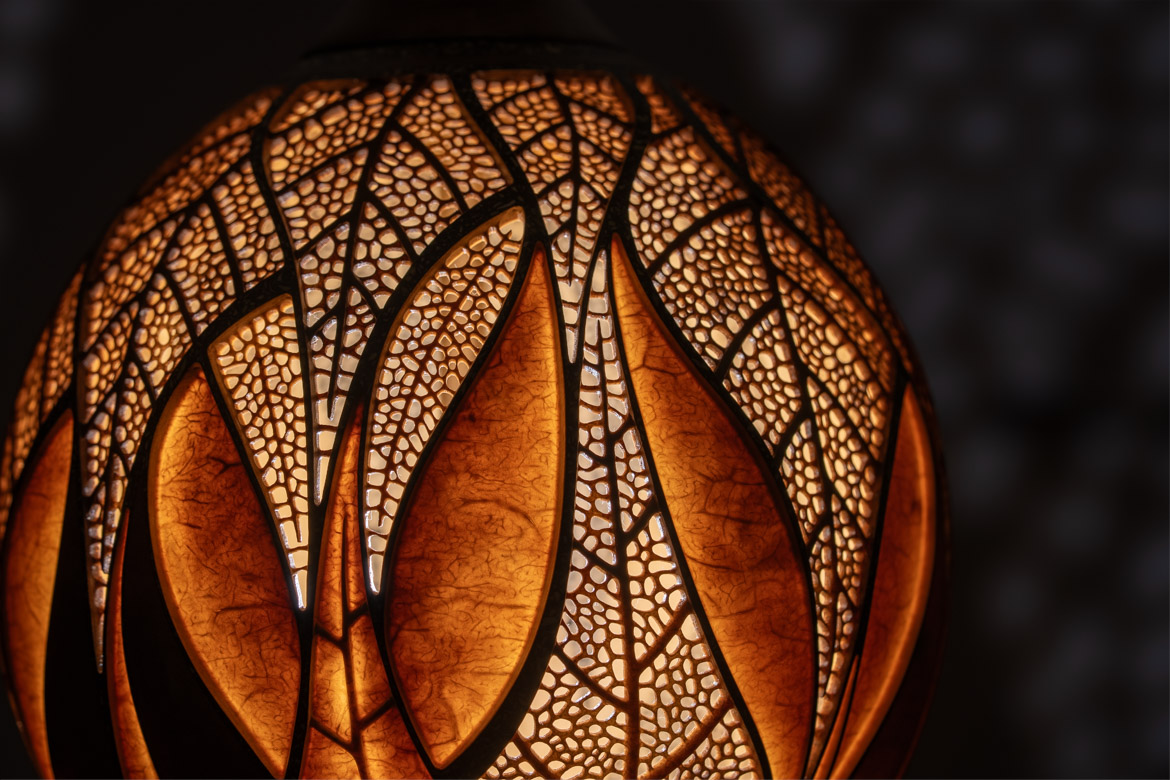
The pattern wraps around the form and opens upwards, allowing light to pass through and spread across the ceiling.
It creates a soft, organic structure above — like a canopy of leaves suspended in space.
The surface shifts between solid and open, between shadow and glow.
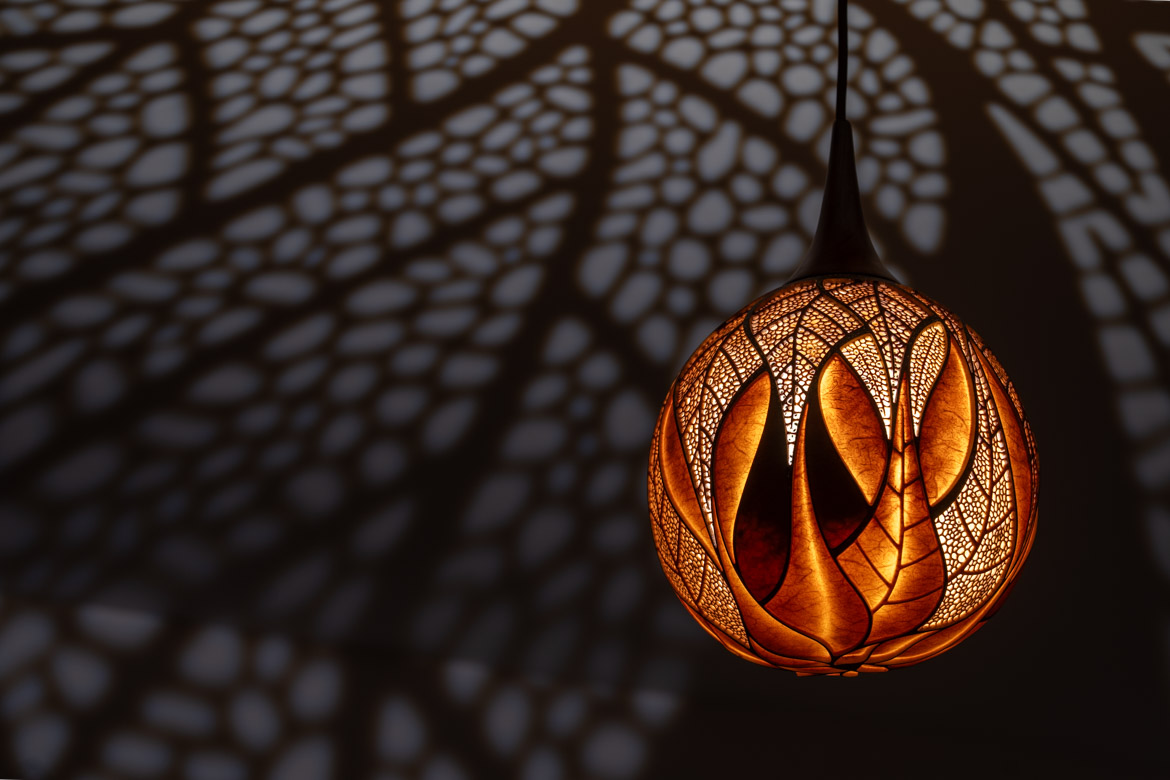
In daylight, the form remains calm and sculptural.
At night, it comes alive through light.


Making of Virelis
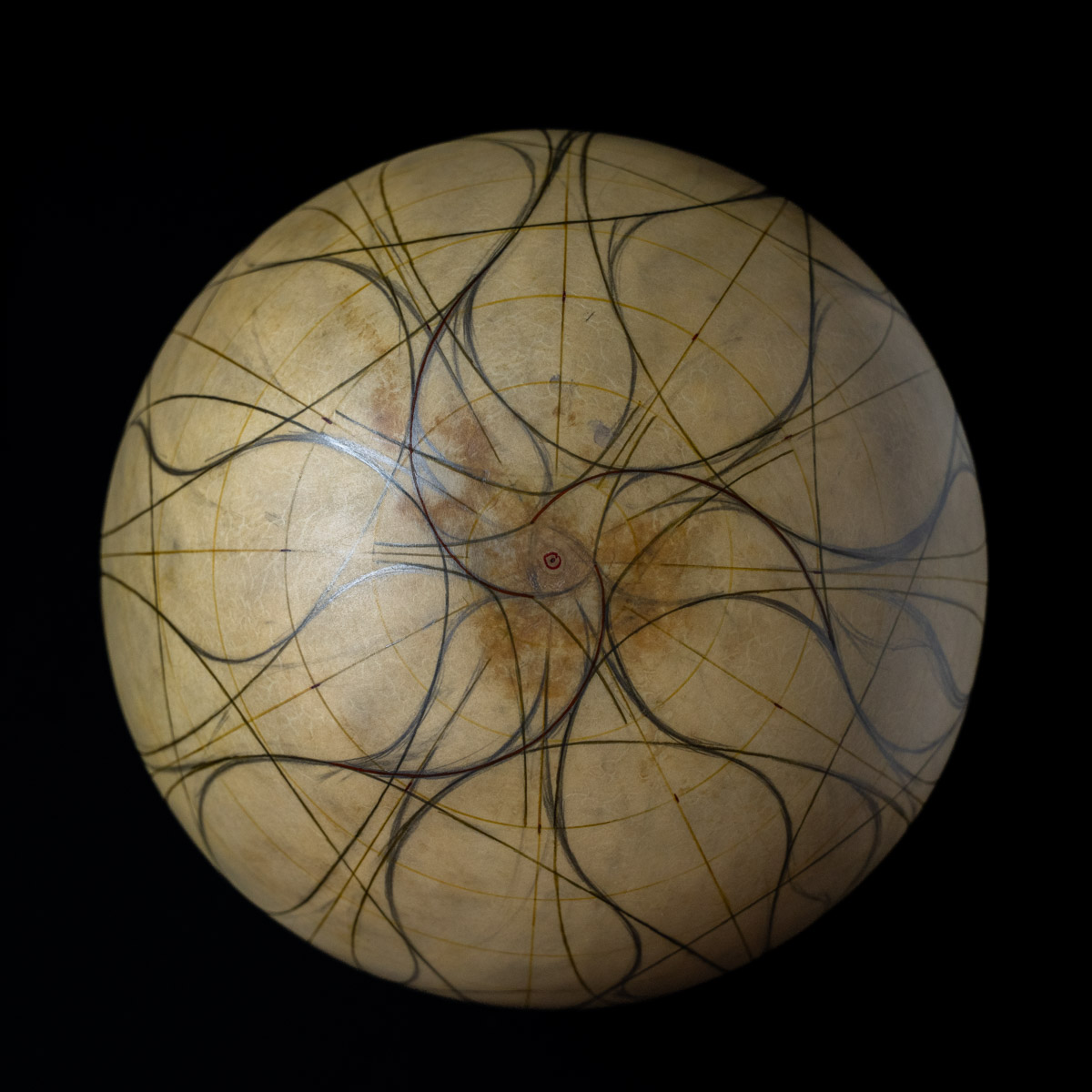
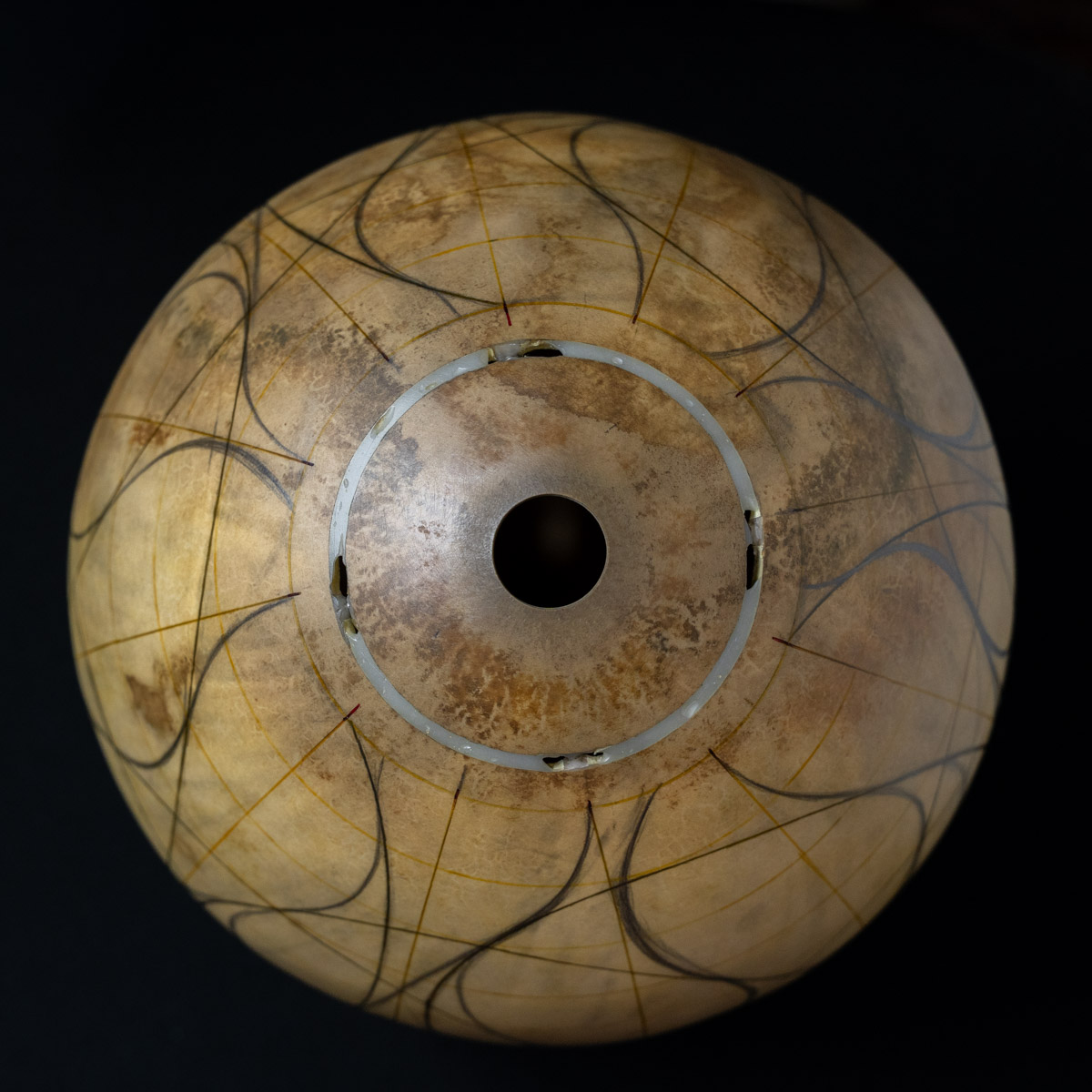
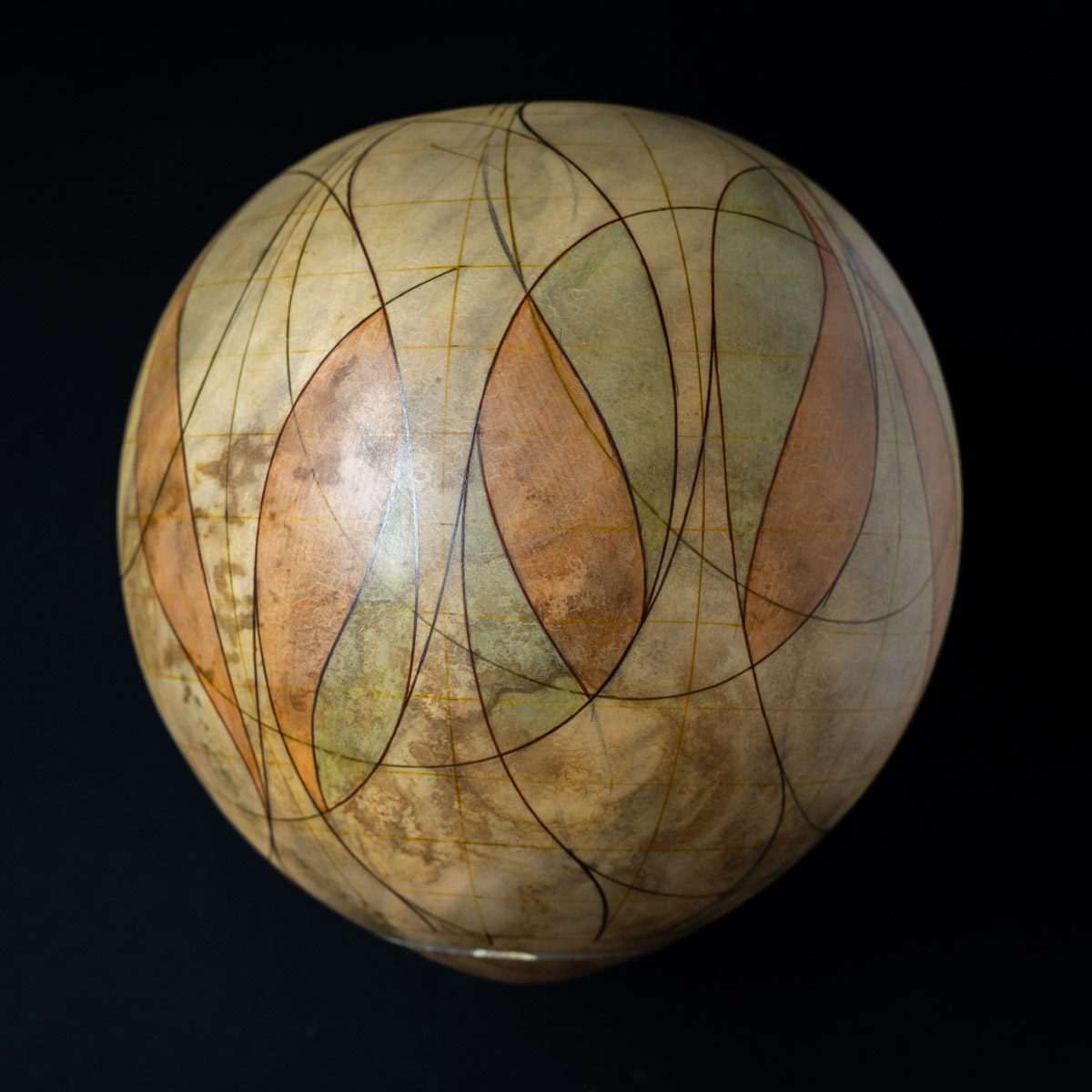
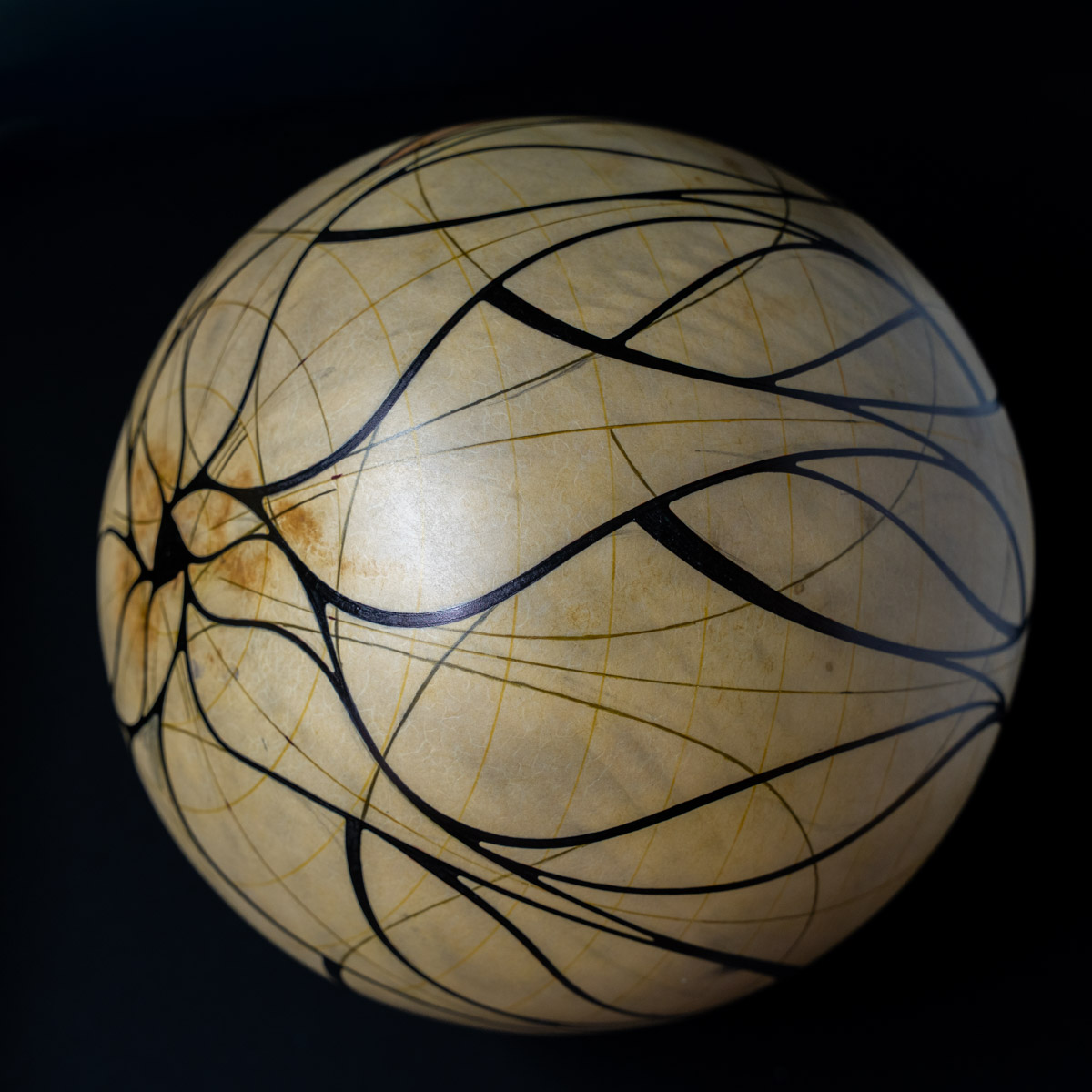
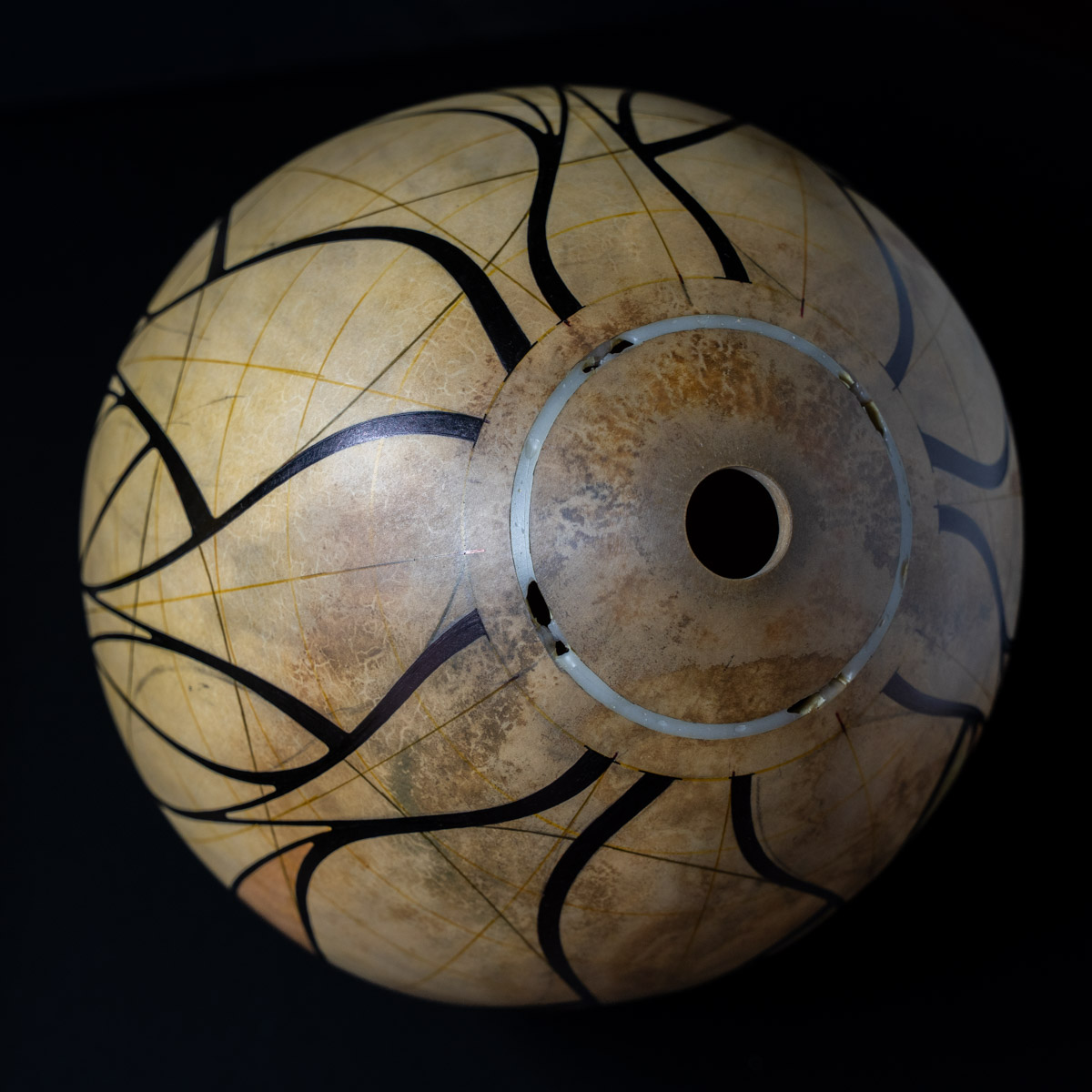
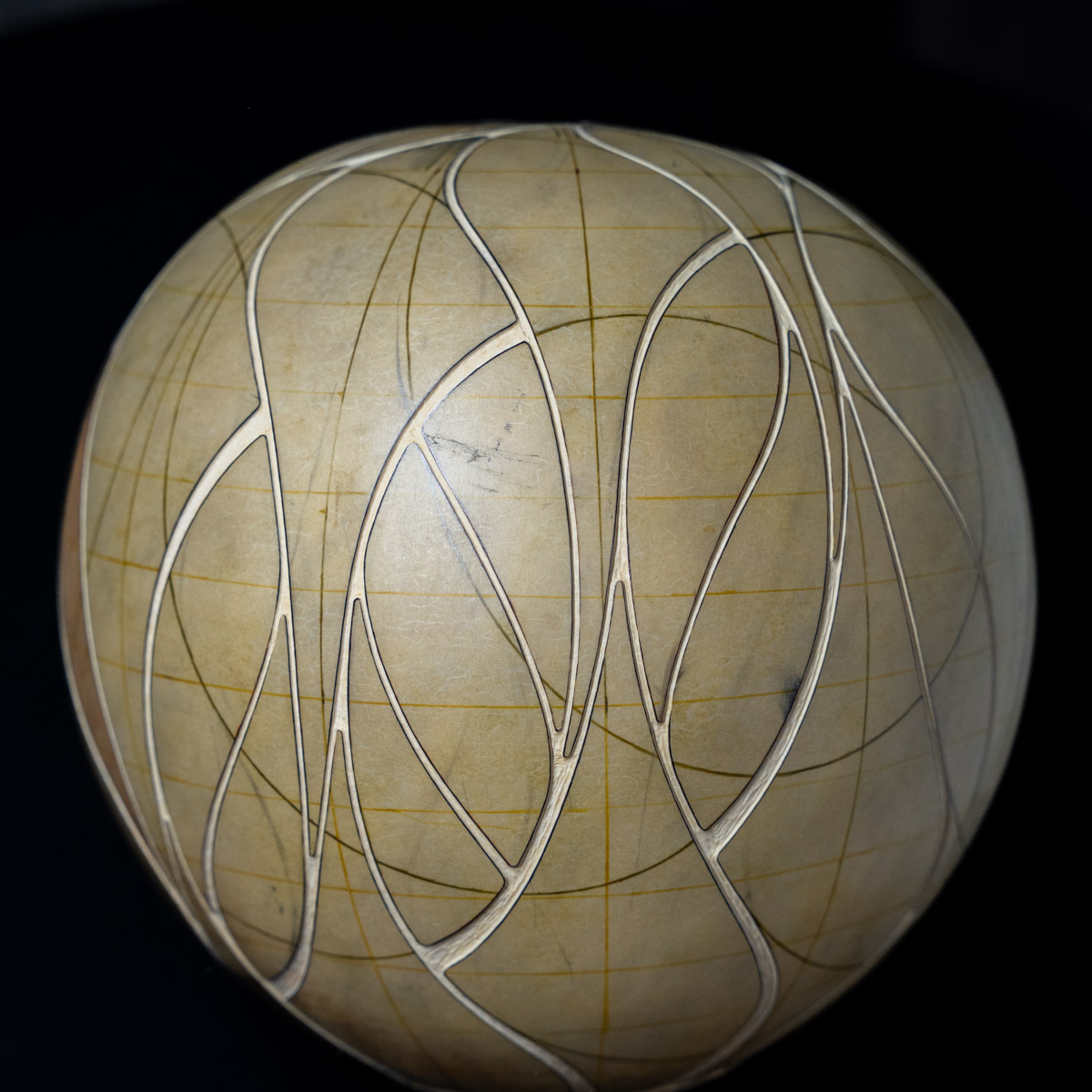
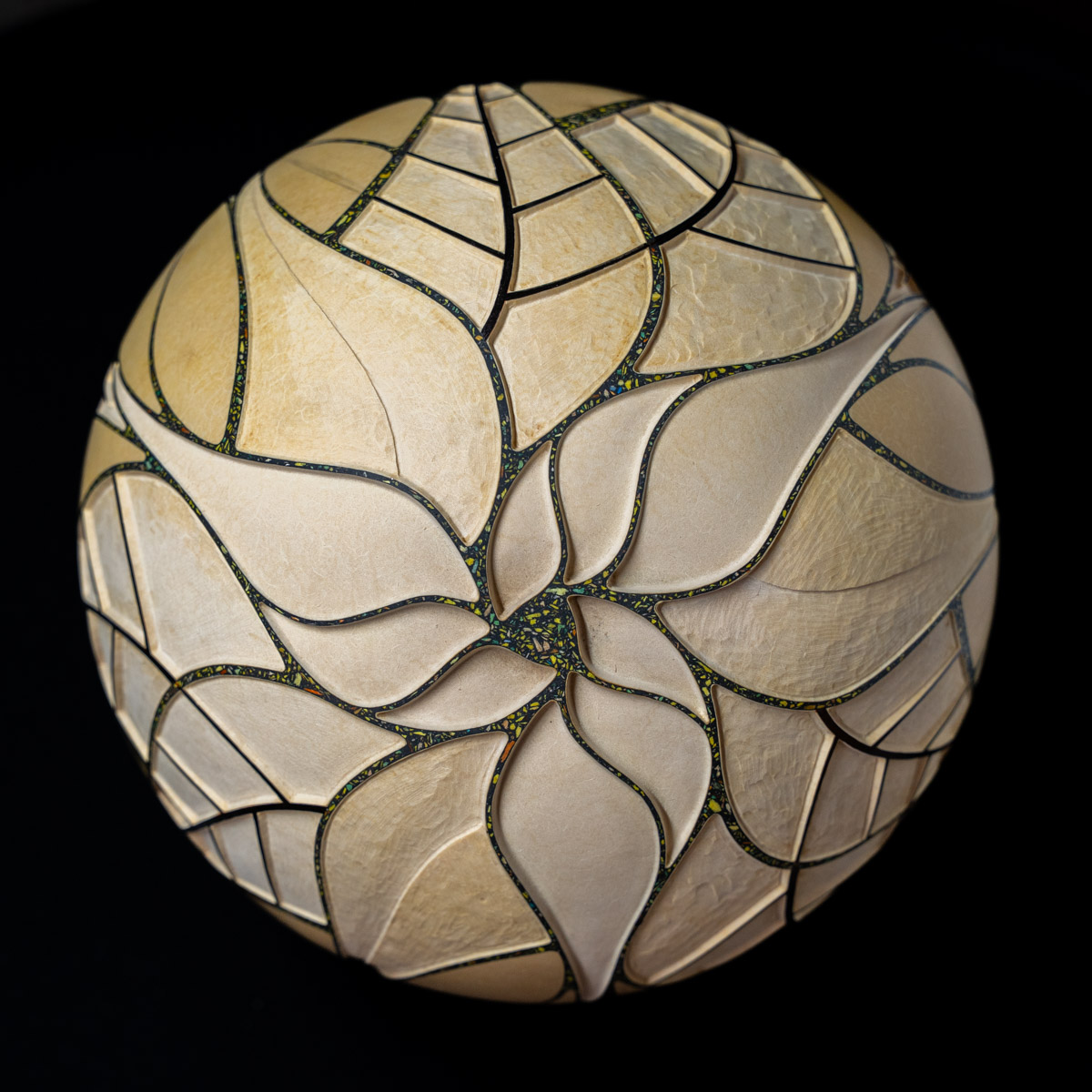
The process begins with a geometric grid.
At first, the lines remain abstract.
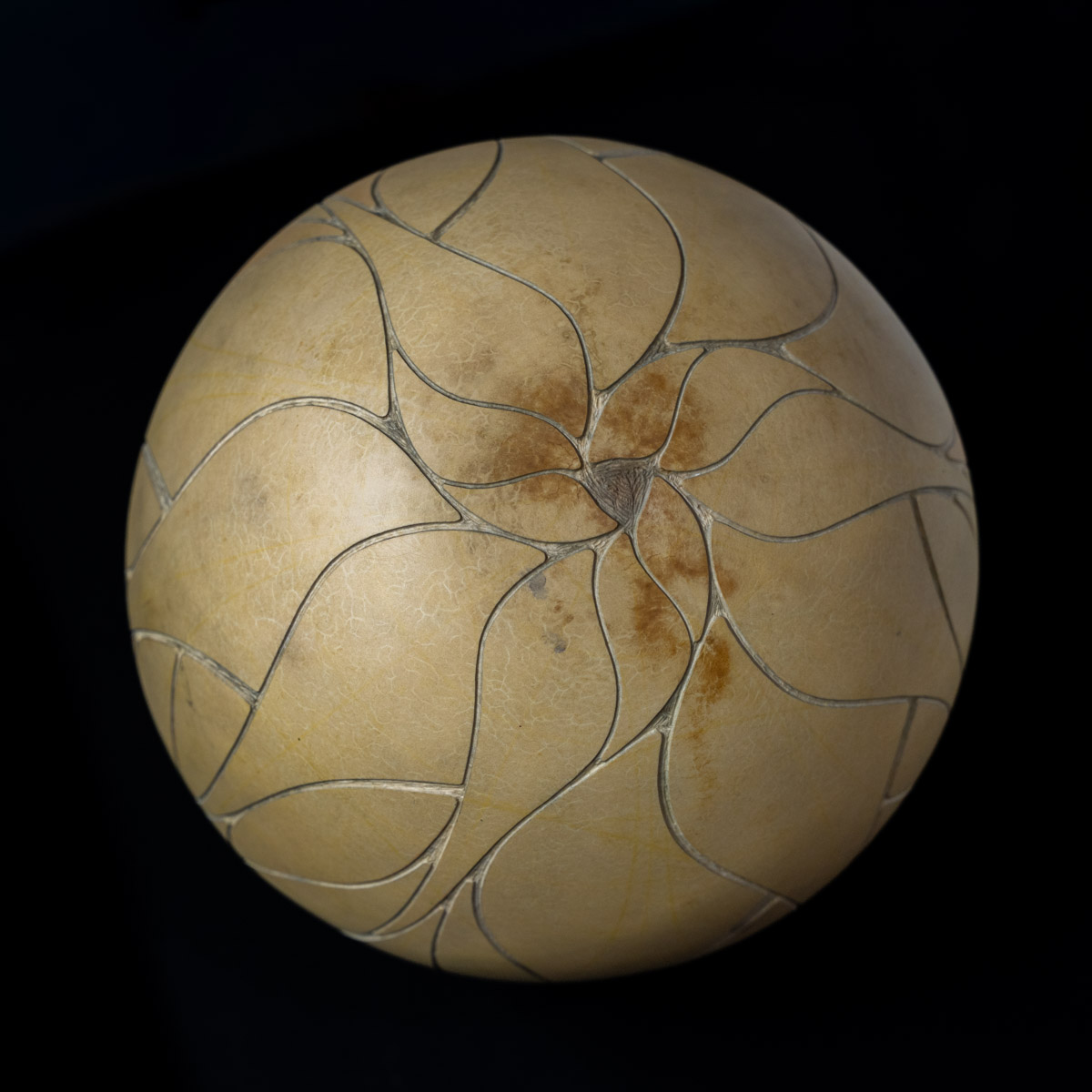
With each step, the pattern starts to suggest its direction — becoming more organic and more defined.
Gradually, the structure develops into a system of leaves.
Defining the structure
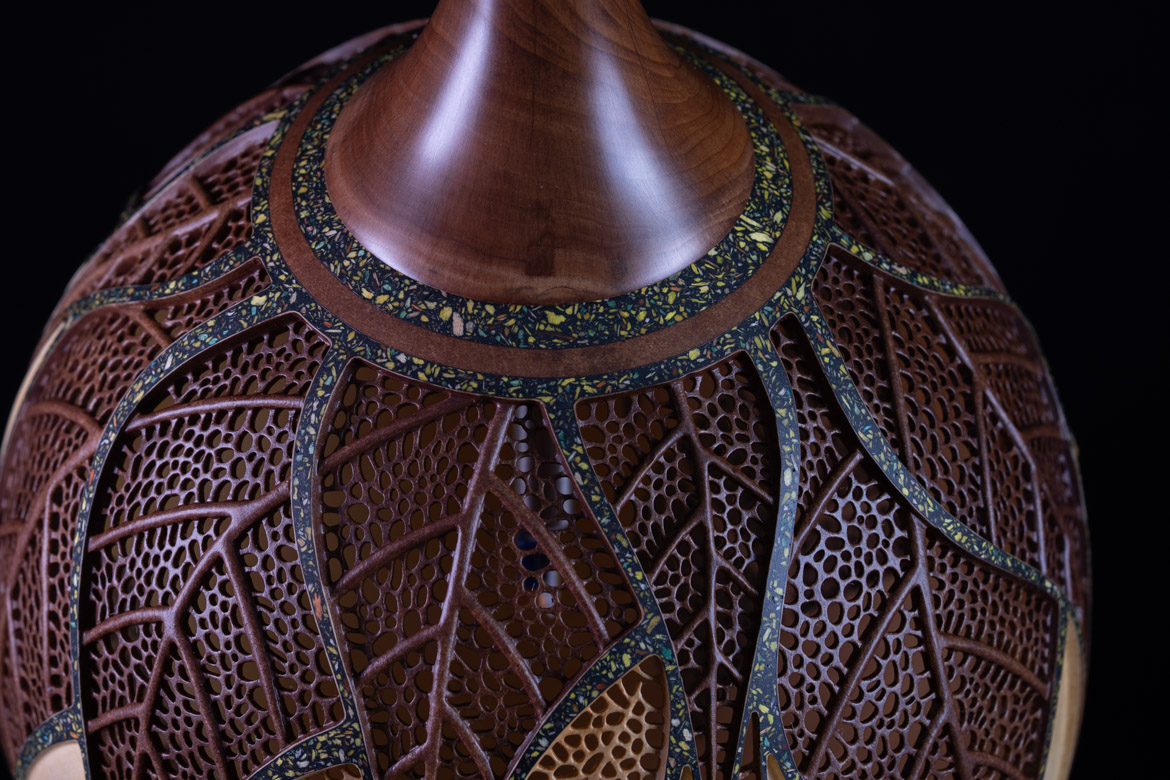
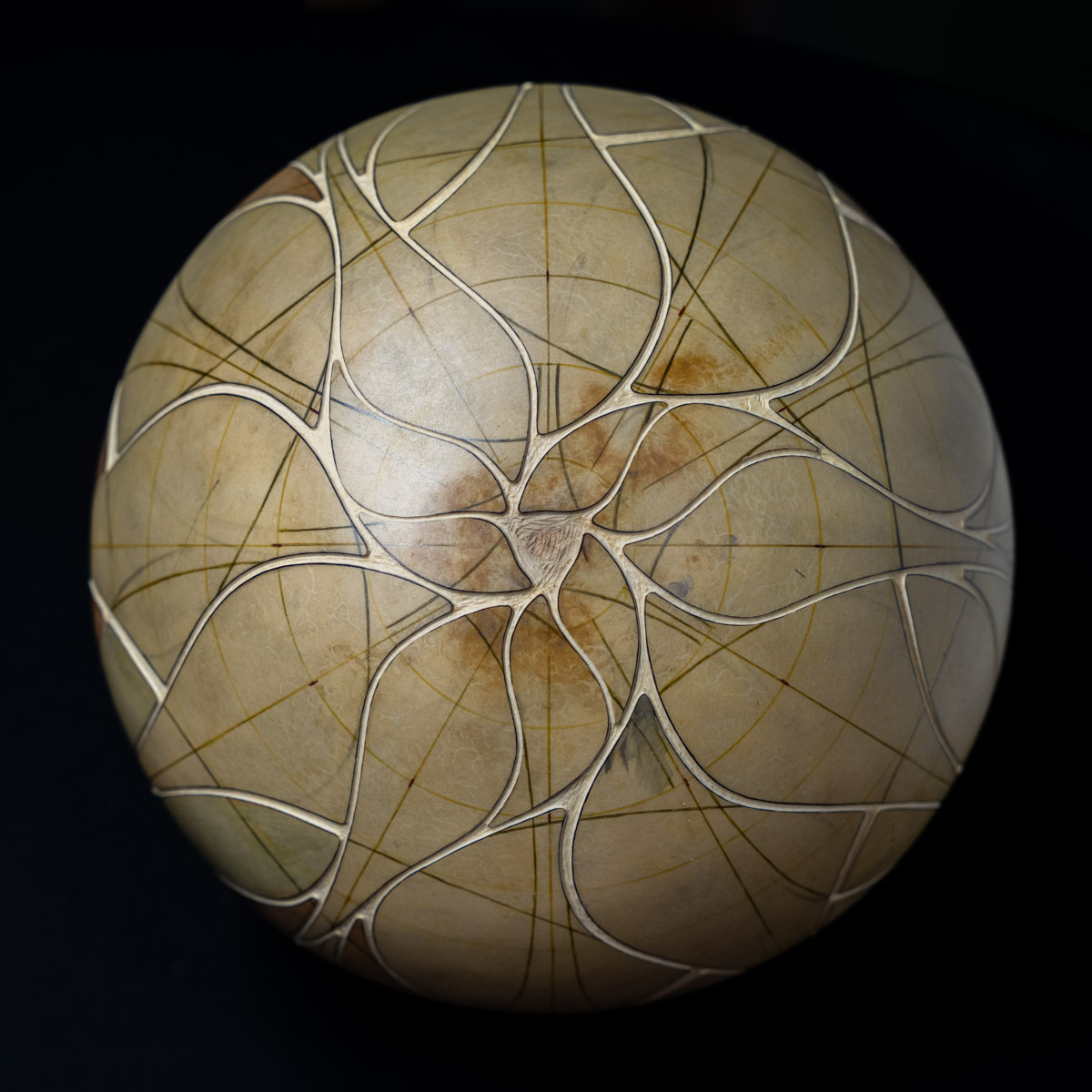
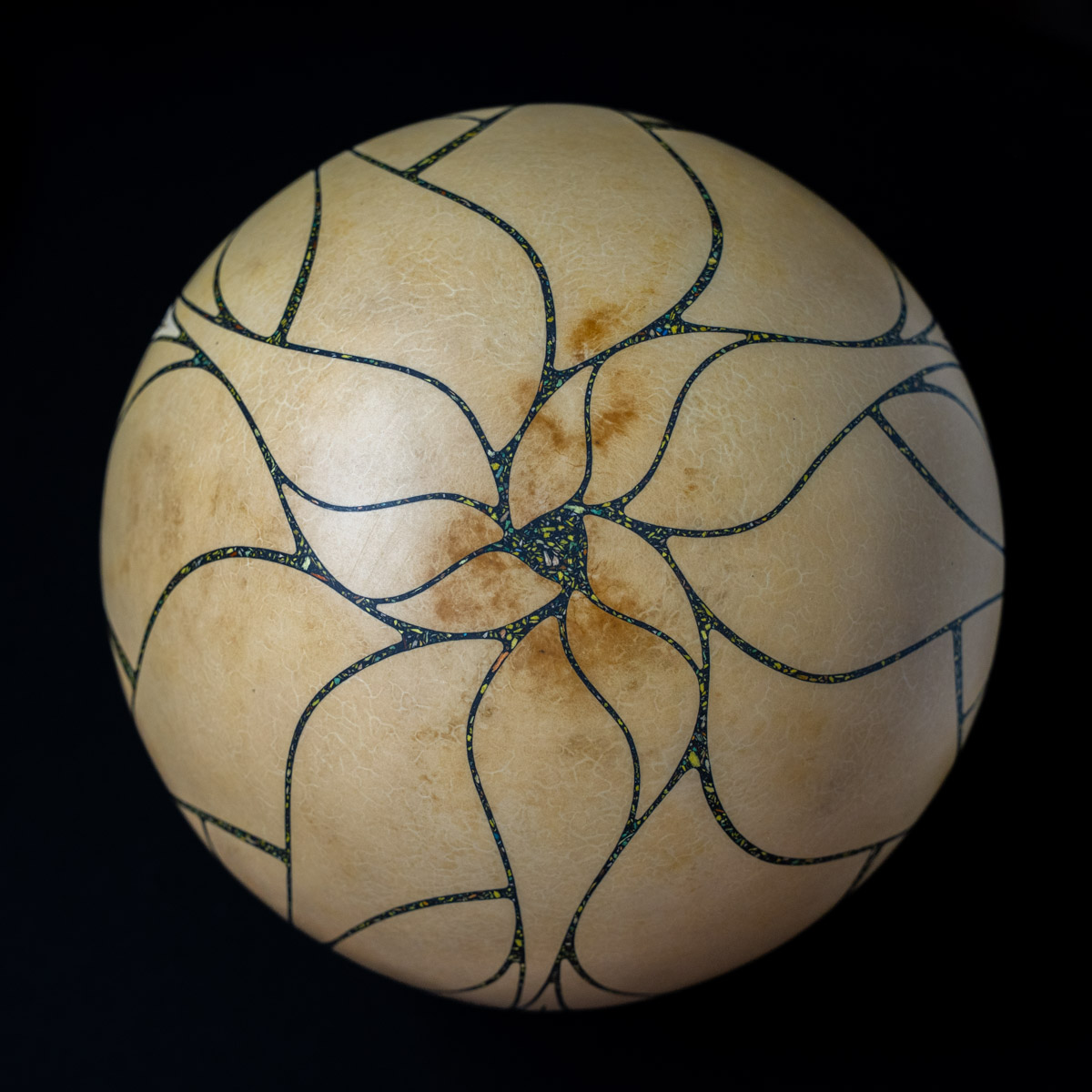
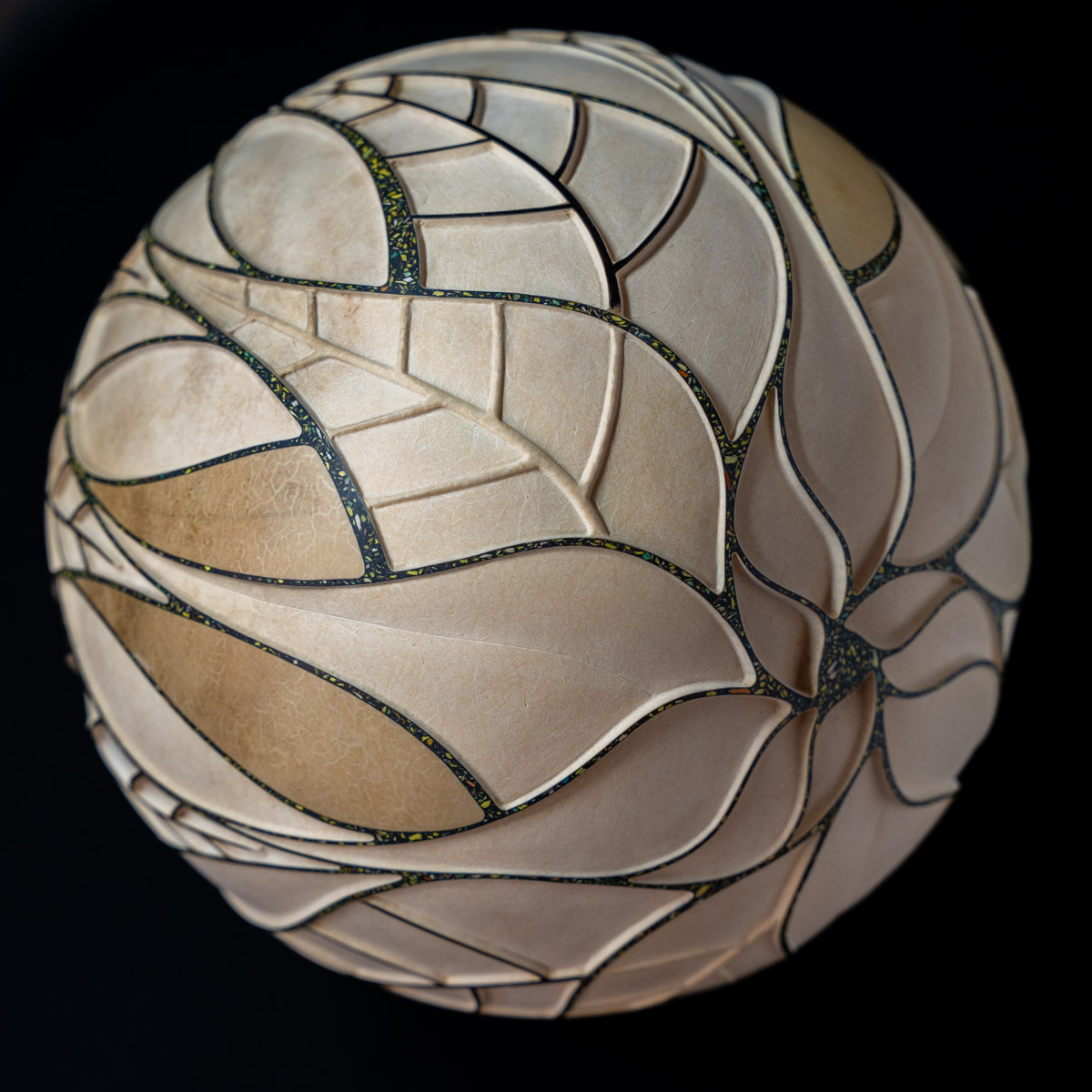
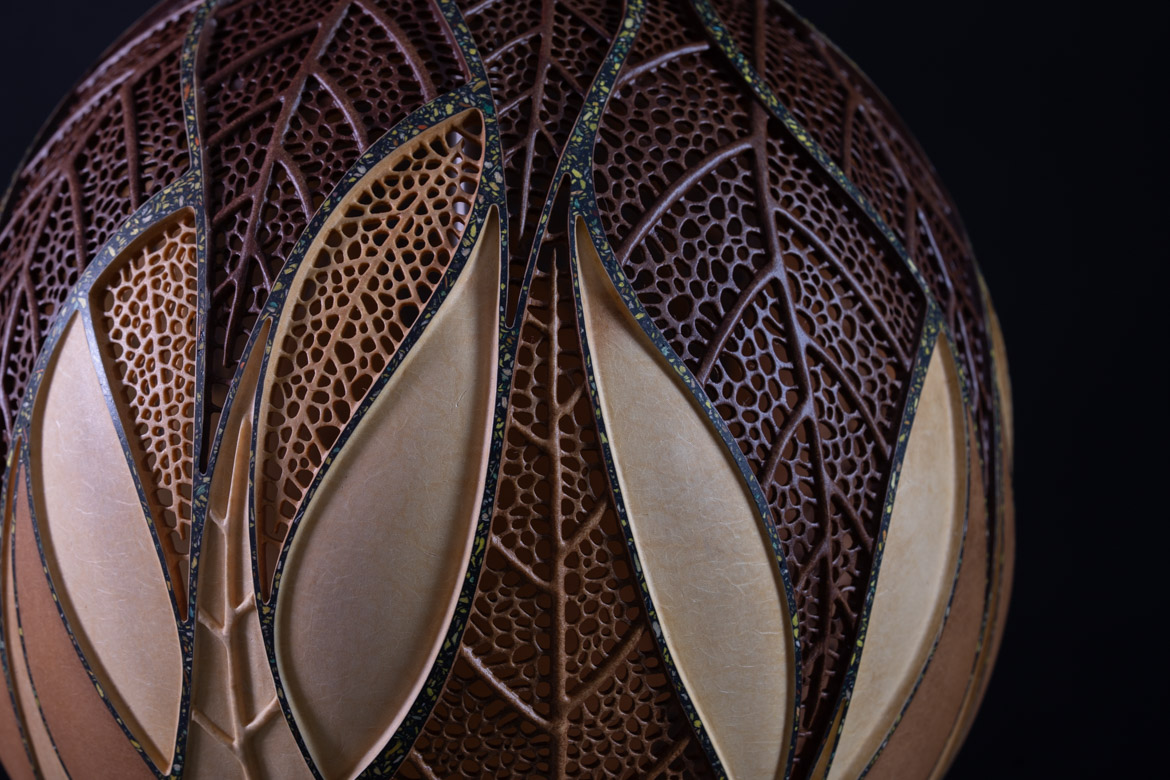
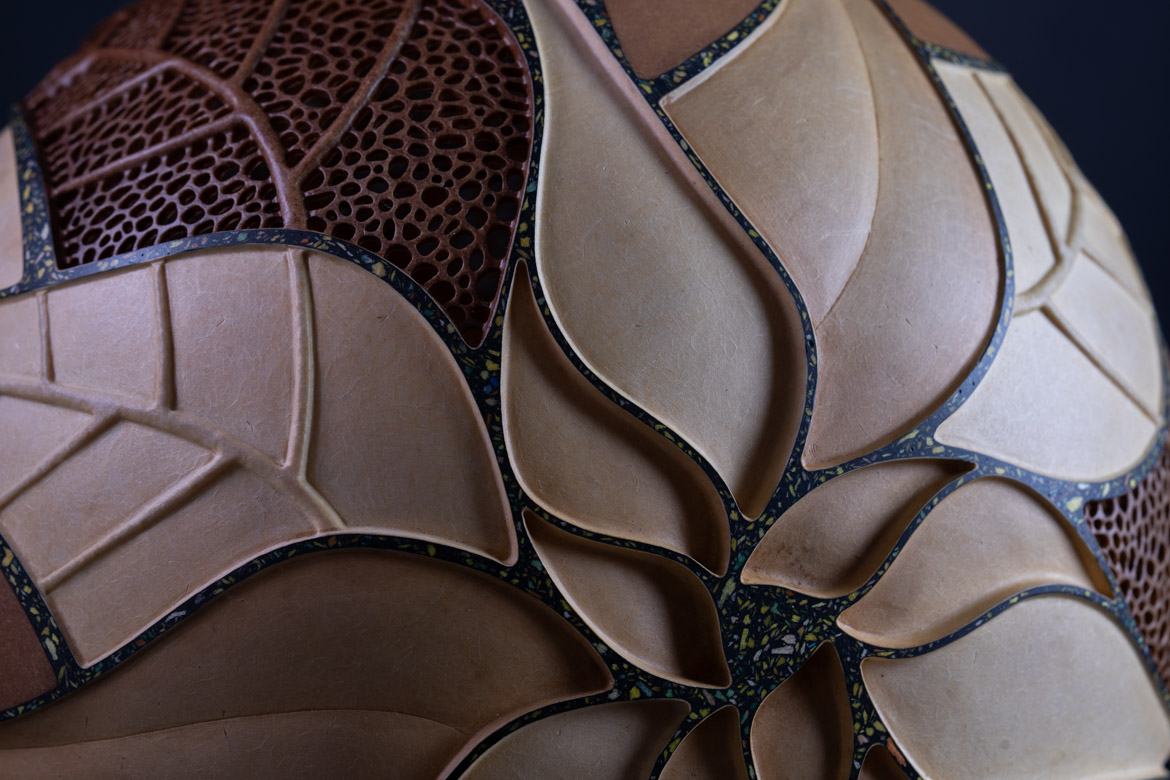
The carved lines are filled with polymer gypsum mixed with particles of stabilized wood — a technique I’ve been developing in my recent lamps.
The lines are often very thin and shallow, so each step requires precision — carving, filling, and sanding.
Afterwards, the surface is leveled and cleaned, leaving a clear and continuous structure.


Shaping the leaves
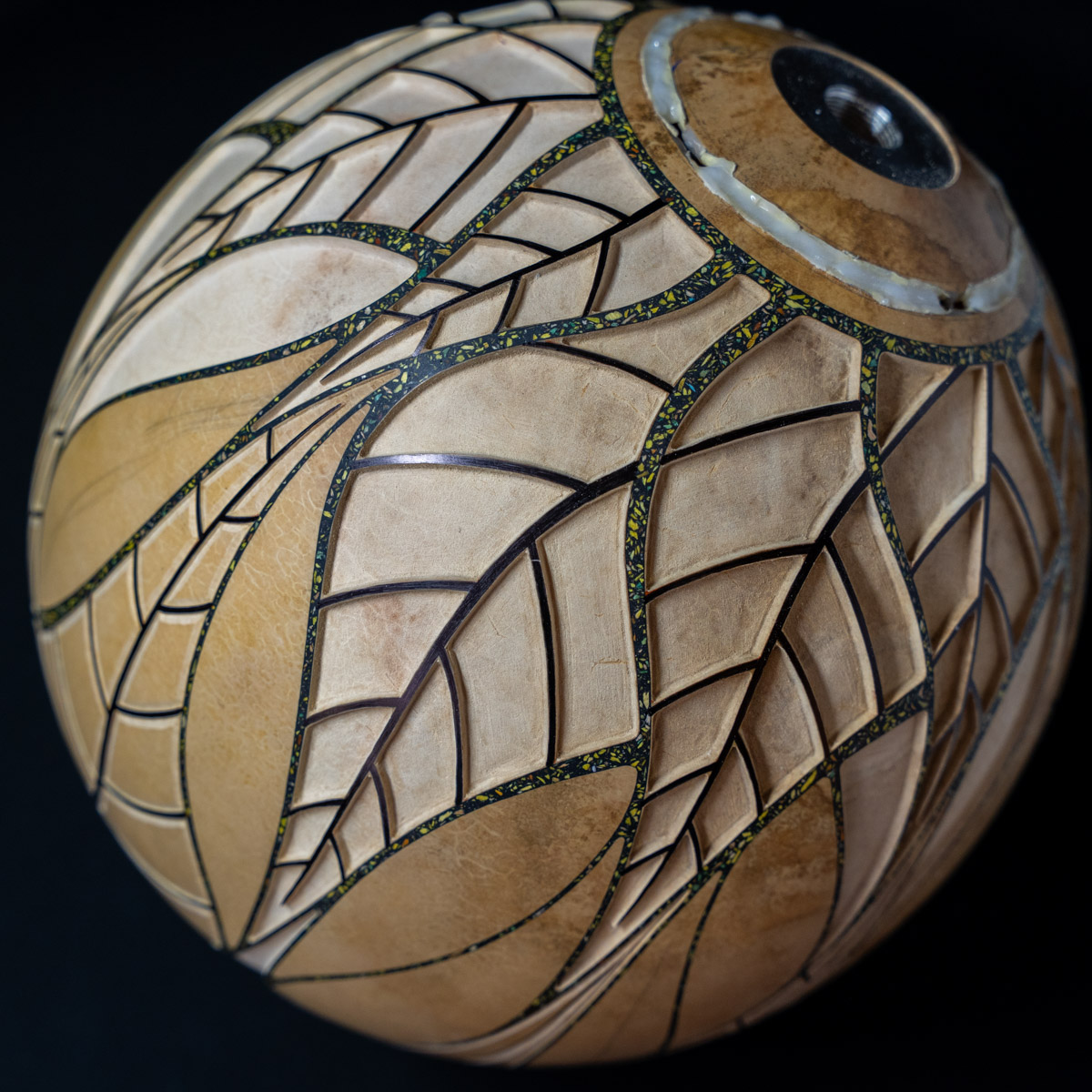
The leaves are shaped as part of a continuous structure — always in relation to the whole pattern.
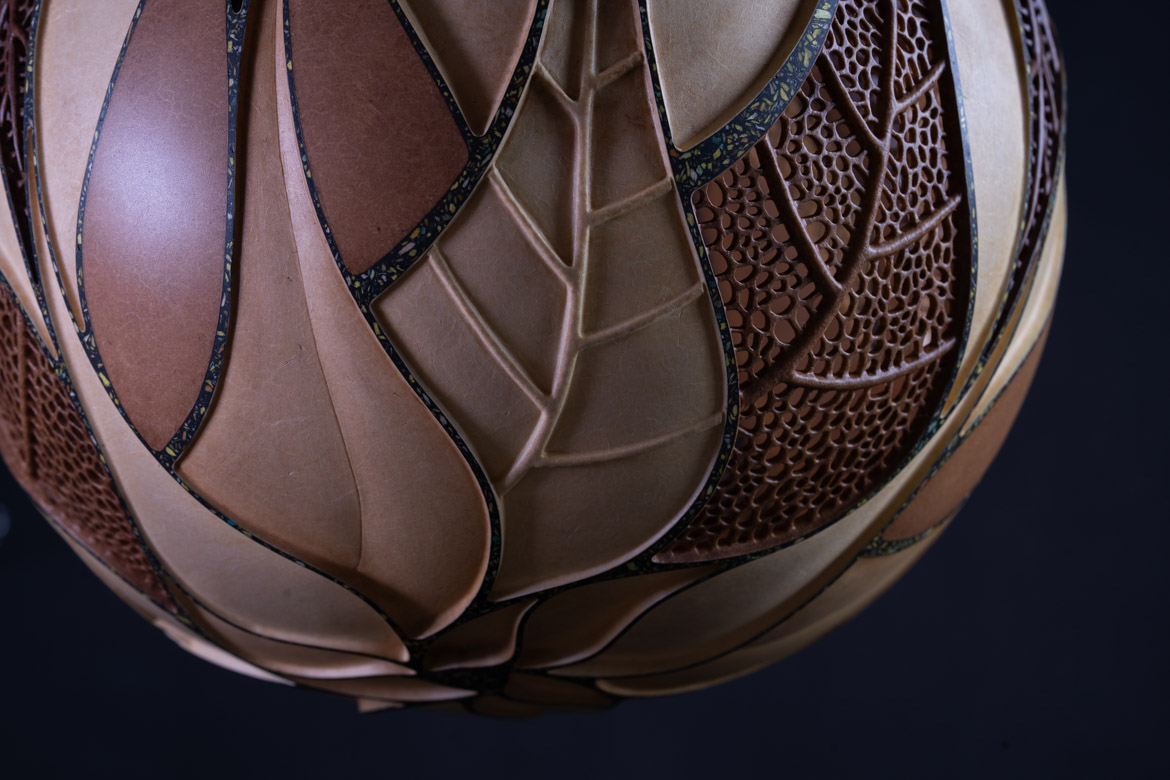
Some remain smooth, others are defined by subtle veins.
Their thickness is carefully controlled to let light pass through in a warm, natural gradient.
Openwork structure
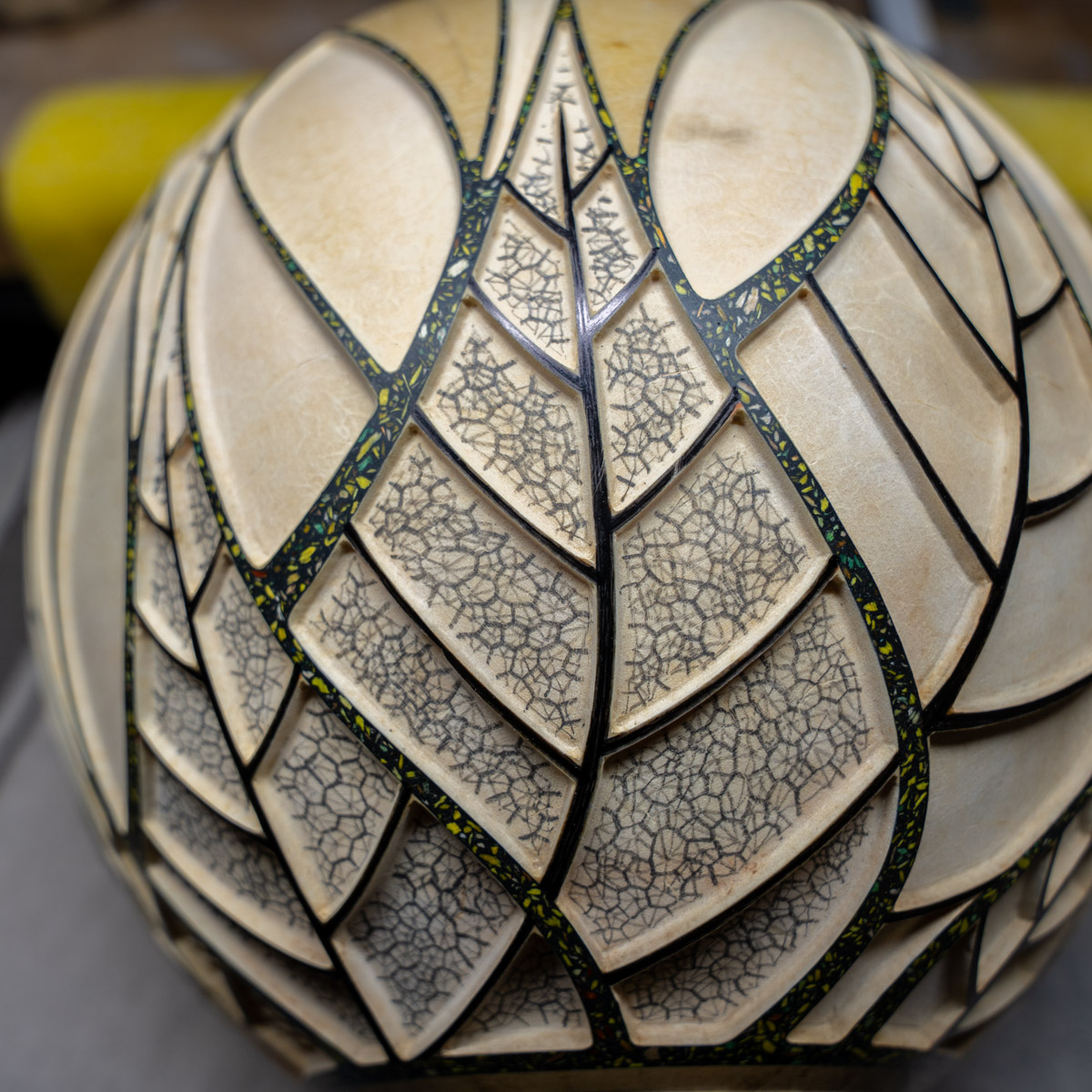
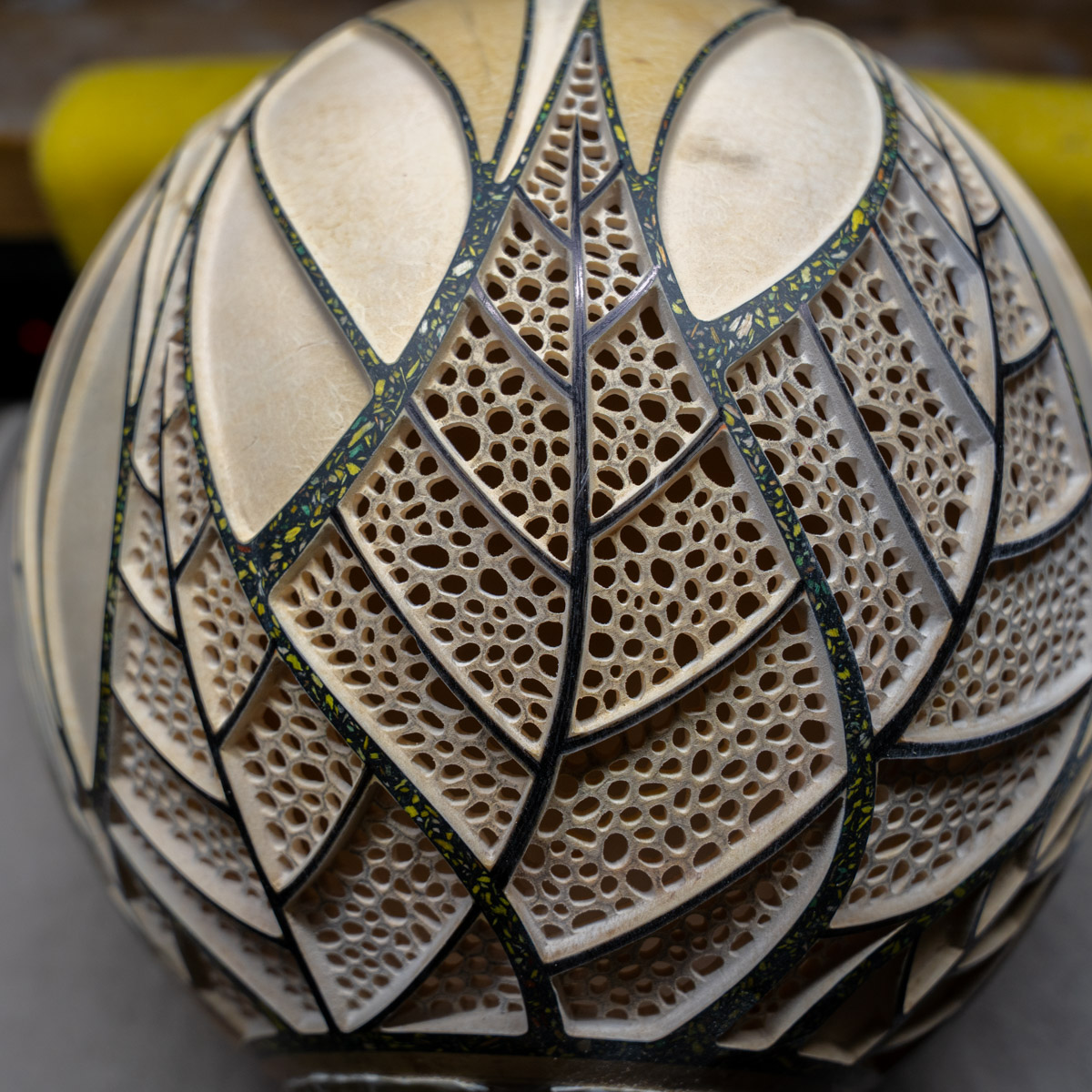
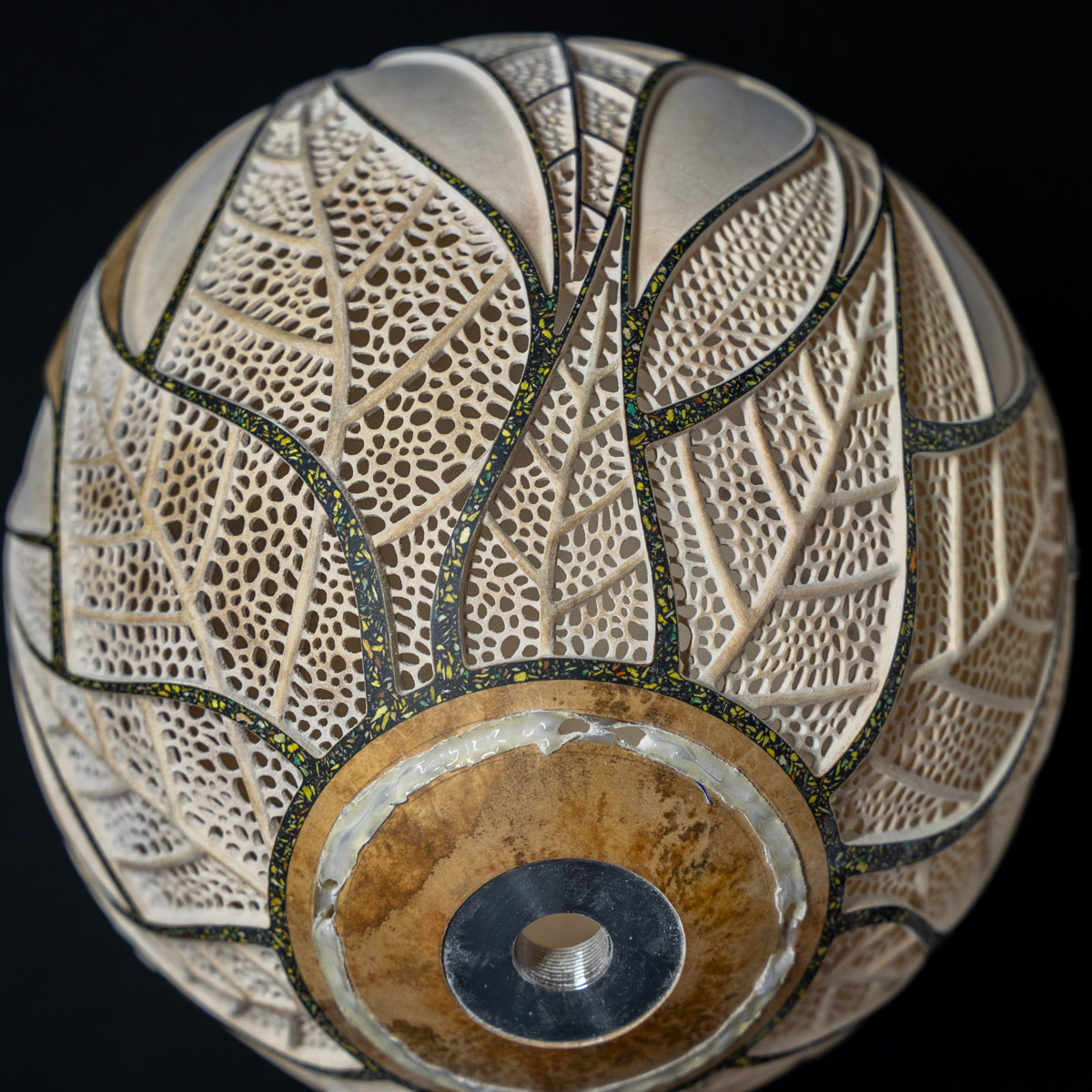
After 8.5 years, I returned to a technique I used in my Escher’s Leaves lamp.
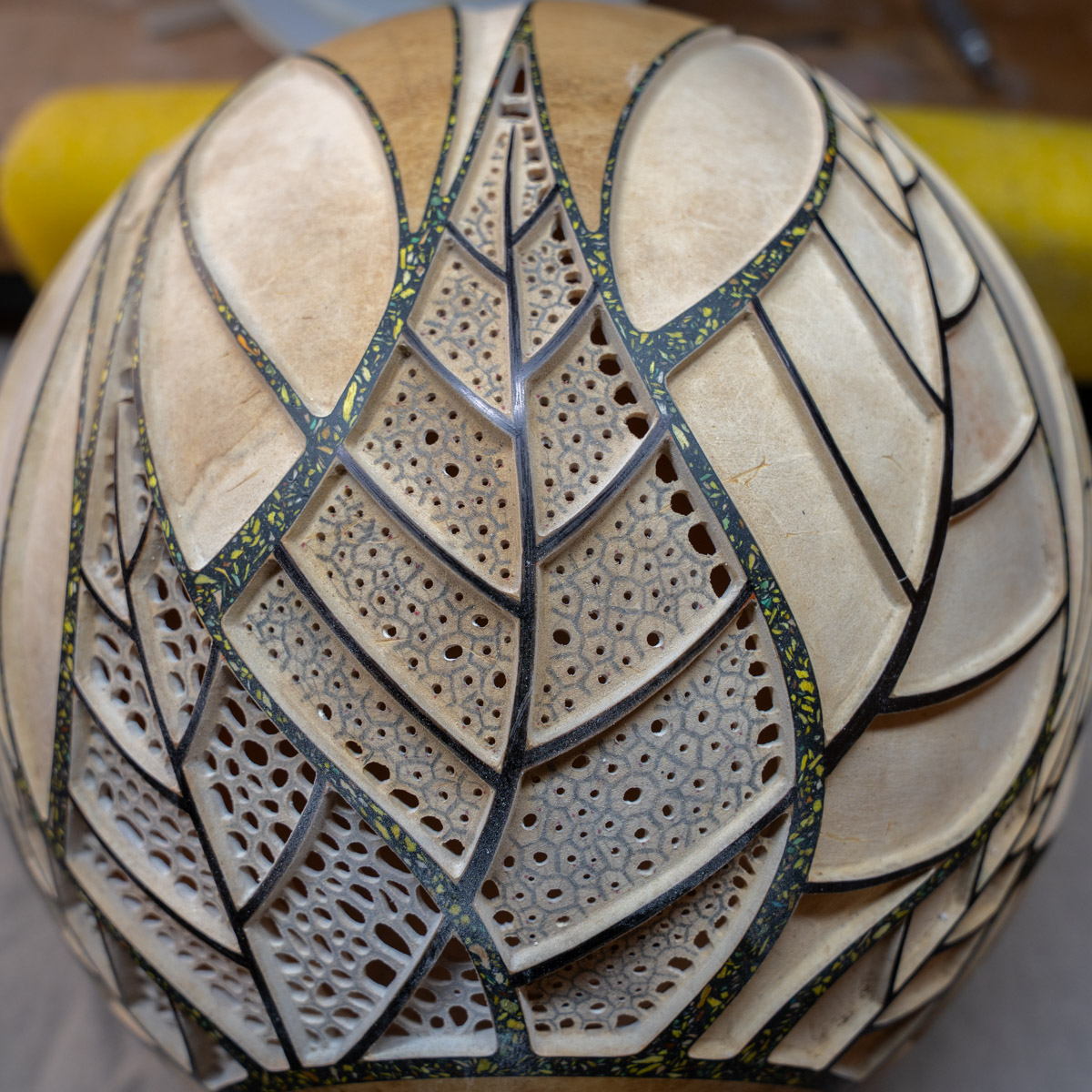
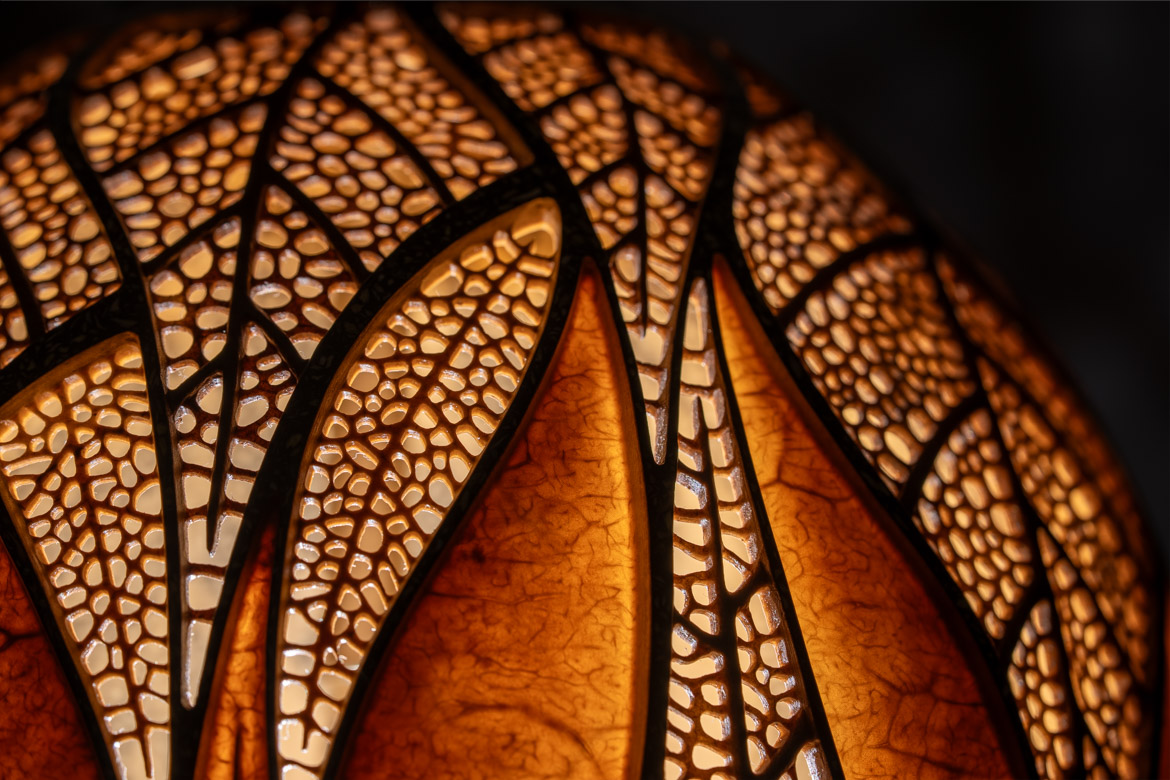
The organic irregularity of the openwork carvings is based on a Voronoi diagram — a pattern often found in nature, where forms grow around points and divide space in a balanced, efficient way.
Each opening is carved rather than drilled.
The process is demanding, but it allows the structure to remain organic and fluid.
Painting
The openwork is painted as one of the final steps.
In daylight, the darker tone softens the contrast and gives the structure a more natural, elegant quality.
Atmosphere and detail
The light defines the space first.
Soft patterns spread across the ceiling and walls, creating a calm, immersive atmosphere — like a soft, organic structure unfolding above.
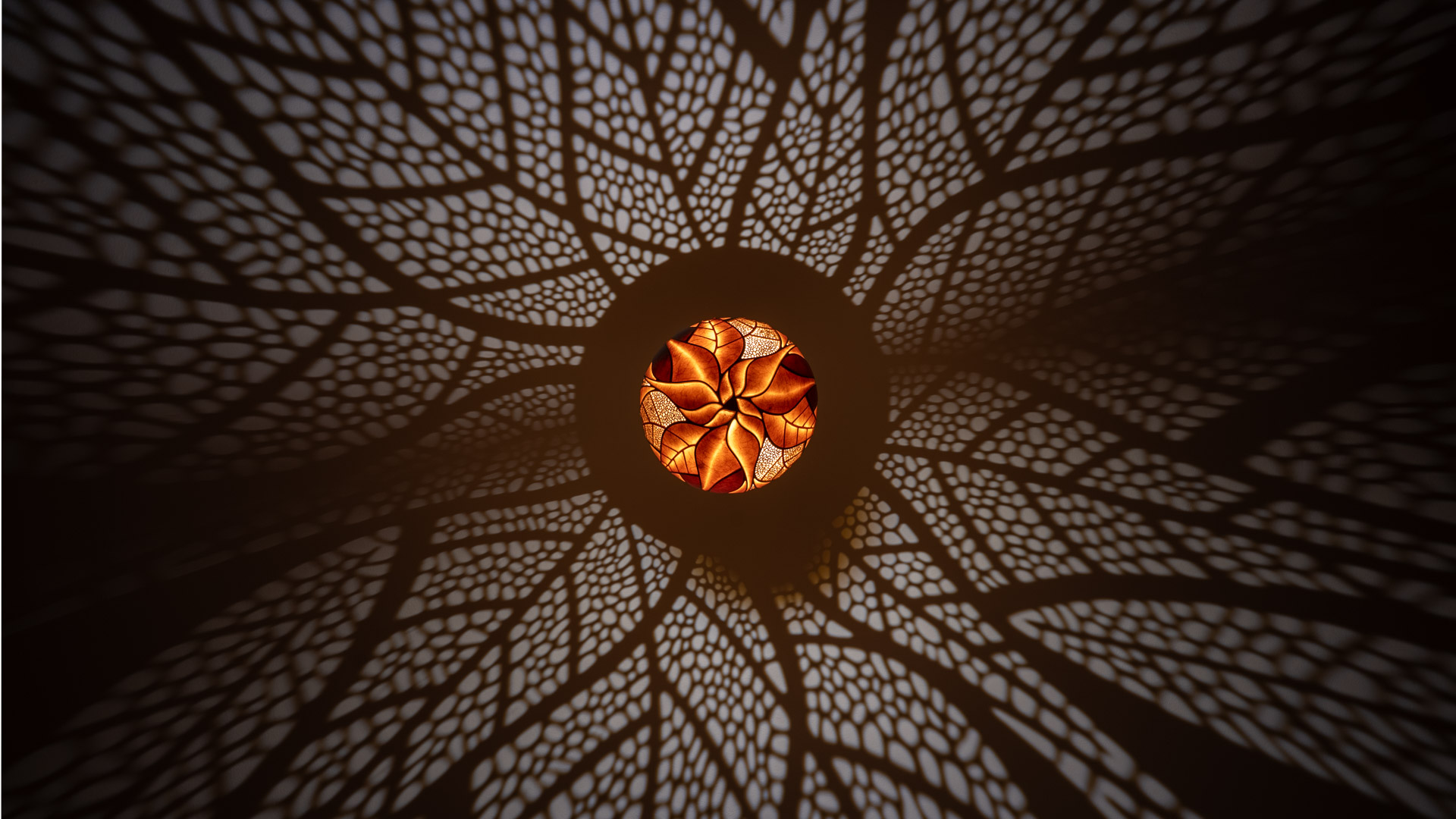
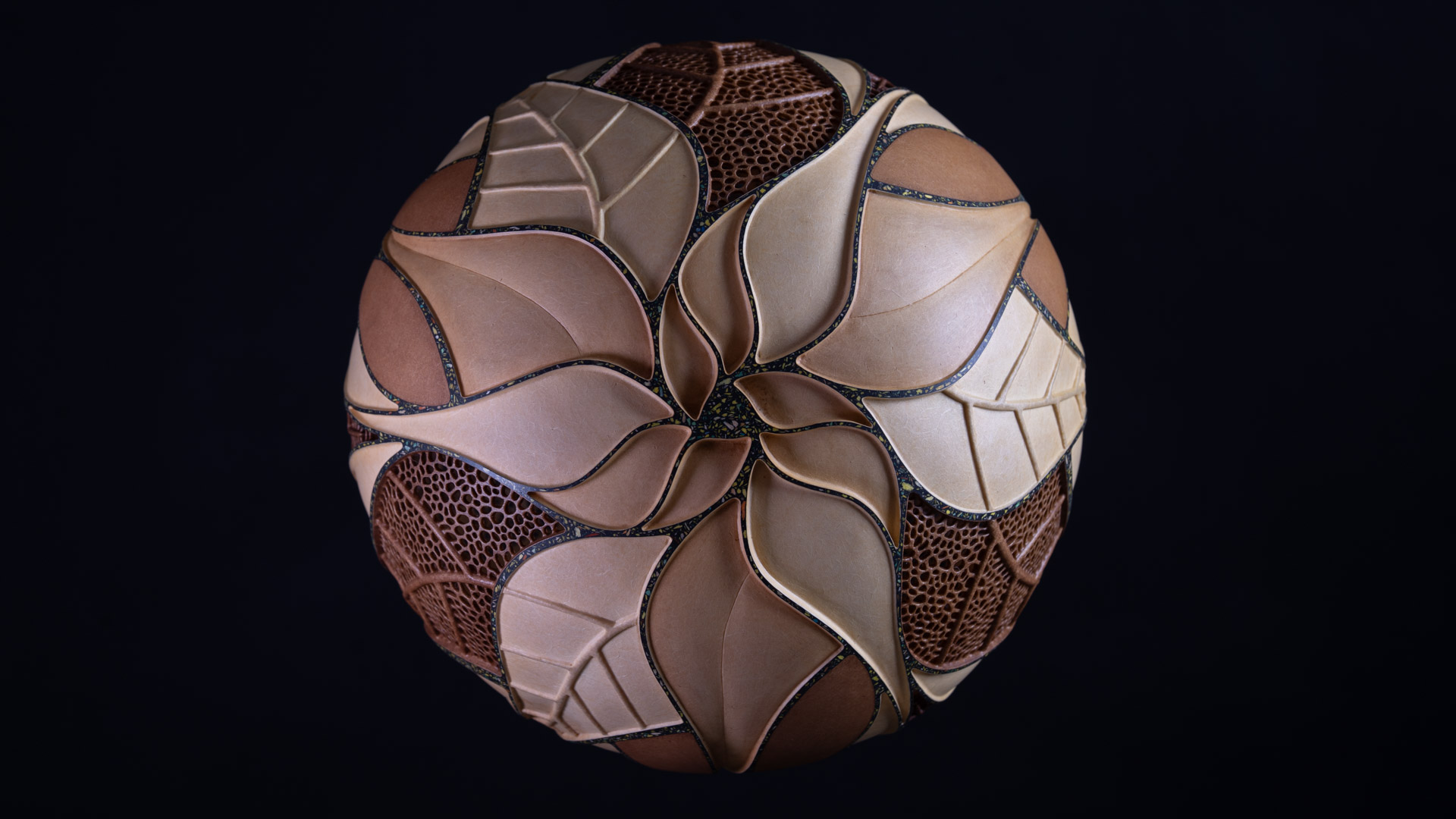
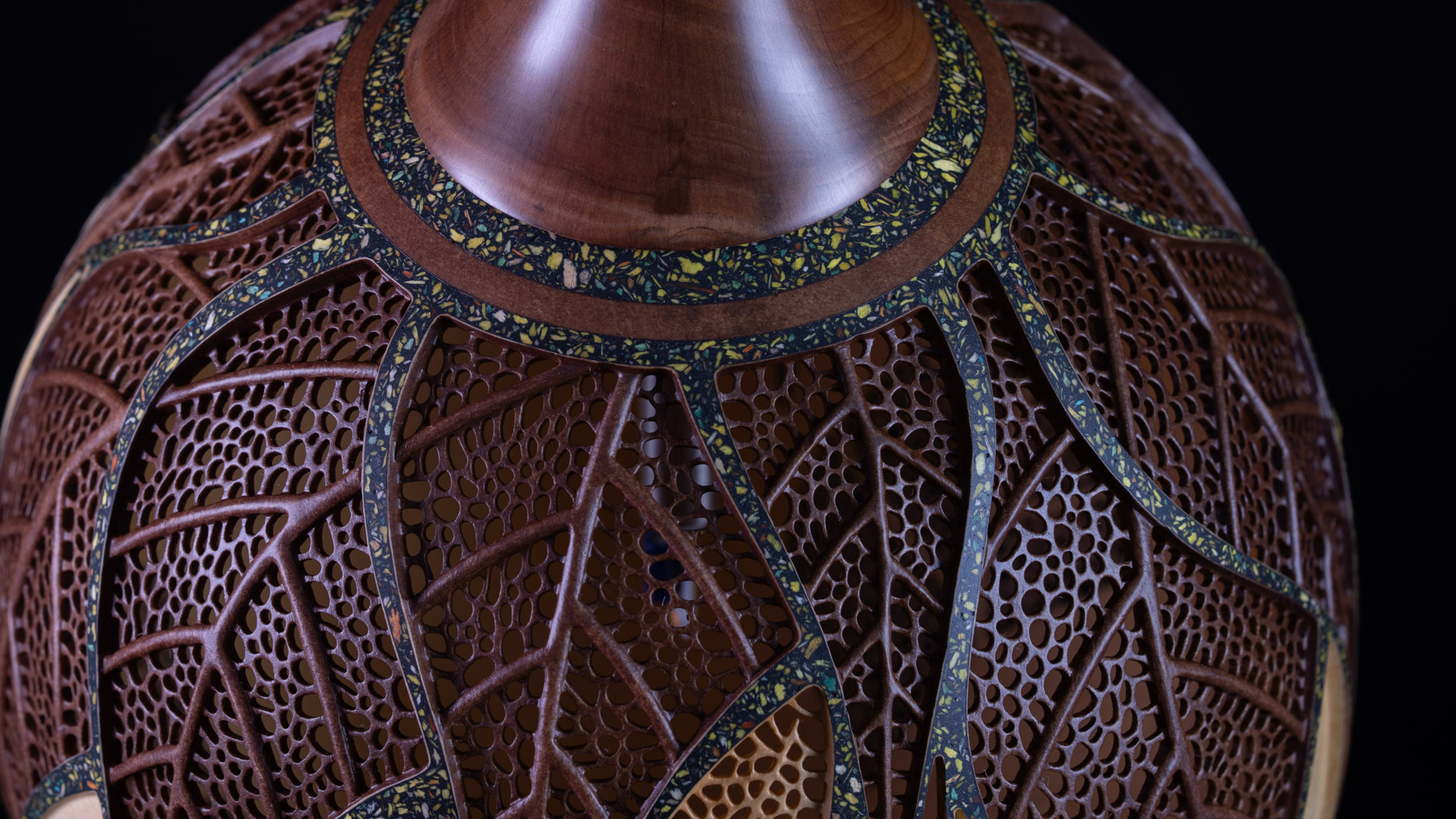
Then the details begin to emerge.
The structure of the pattern, the transitions between surfaces, the subtle variations in thickness and light.
From a distance, it feels like a whole.
Up close, it reveals its complexity.
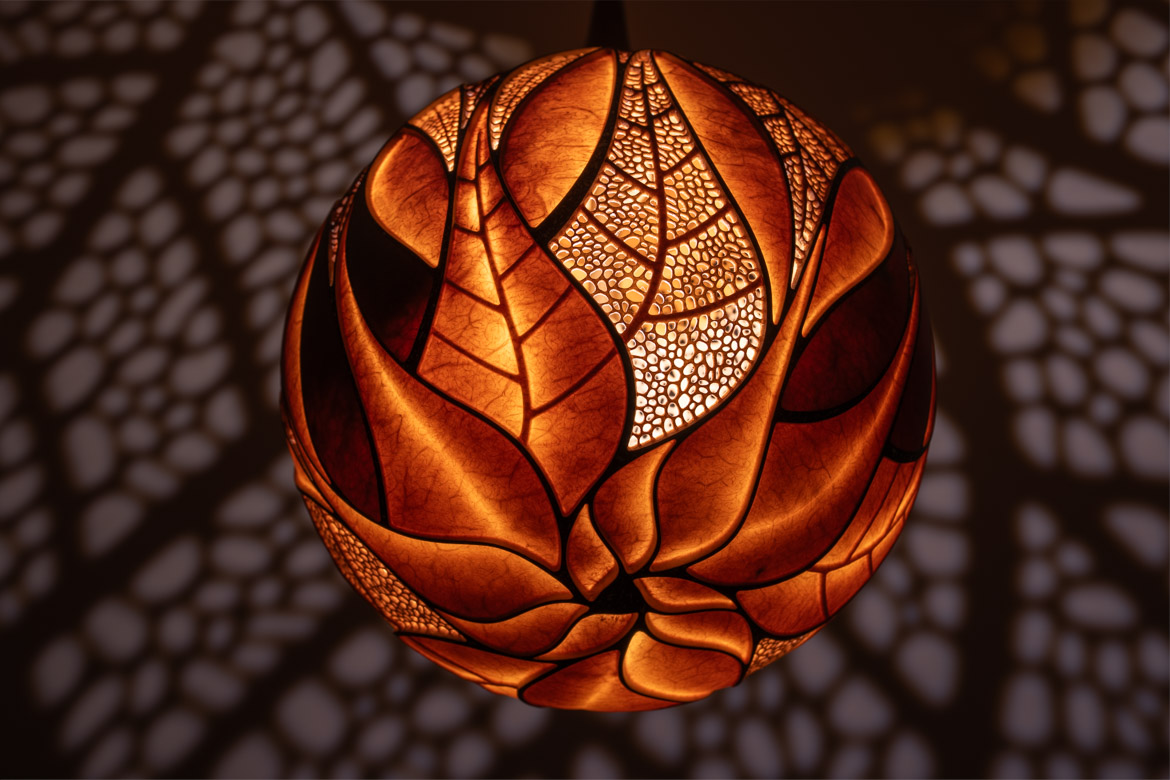
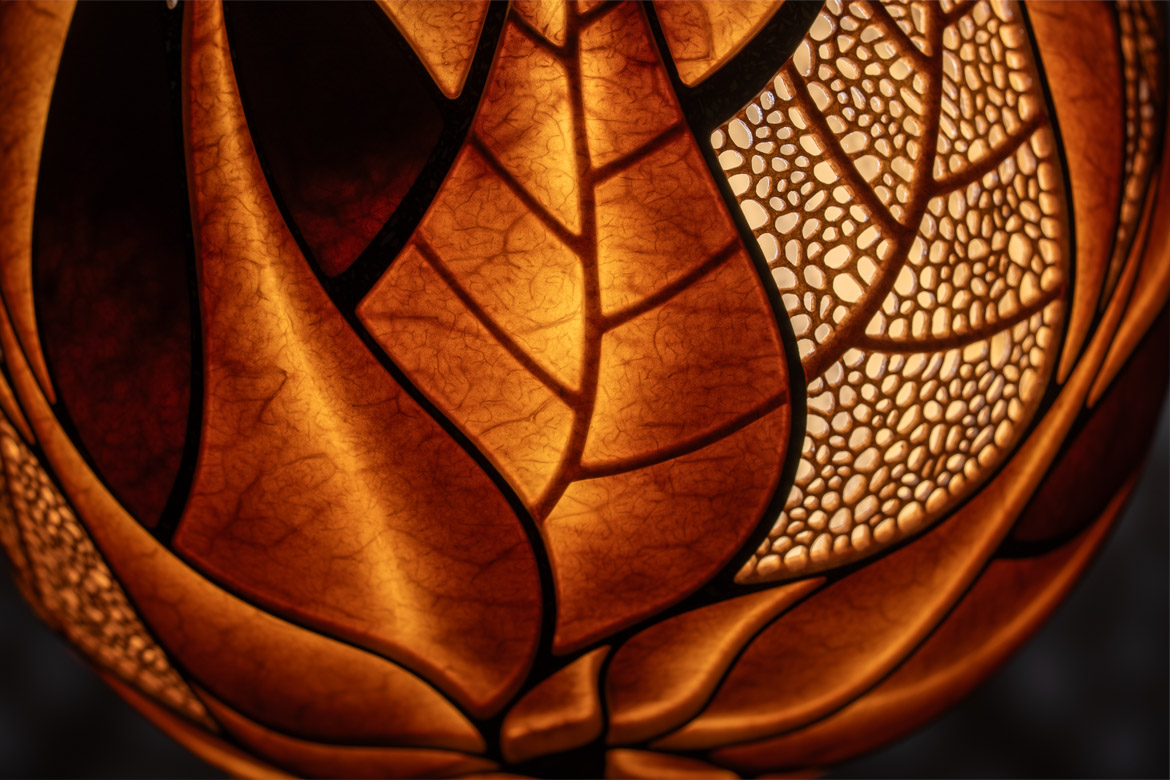


Creating Virelis was a rewarding challenge and an important step in my artistic journey.
Virelis is available for sale.
Price: USD 27,000
Worldwide shipping is included.
Specification
– Gourd diameter: approx. 21 cm
– Light source: LED, 12V, 1.2W
– Power supply: integrated in the ceiling canopy (compatible with 230V installations)
– Wooden elements: yew wood (socket and ceiling canopy)
-Cable length: adjustable
The main gallery presents a selection of my latest lamps.
If you want to see an overview of all Calabarte lamps, you can do so in THIS GALLERY.